
To measure blinds, first decide whether each blind sits inside the recess or is fixed outside it on the wall. For an inside recess blind, take the width in three places and use the smallest, take the height in three places and use the longest, and let the maker handle the deductions; for an outside recess blind, measure the area to cover and add an overlap all round.
Below is how to measure blinds step by step, then each blind type, common mistakes and the window details that matter in a Dubai villa or apartment.
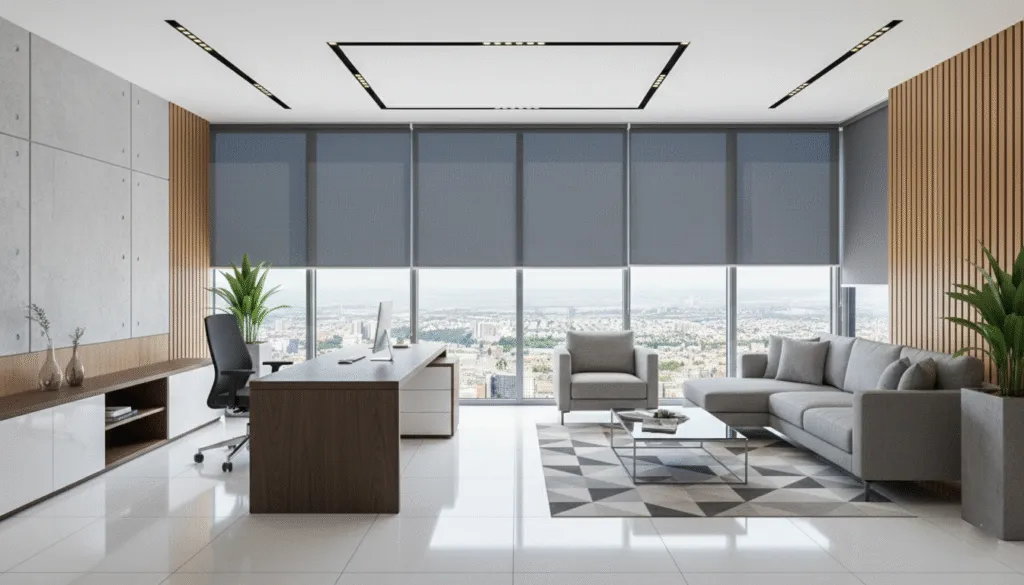
What You Need Before Measuring
Use a steel tape measure, since cloth tapes stretch, plus a notepad and, for any window above head height, a ladder and a second person. Work in millimetres rather than centimetres for accurate measurements, and always write the width first and the drop second.
- Label every window, for example “master bedroom left”, so measurements and orders never get mixed up.
- Never copy figures across a room. Two windows that look the same are often a few millimetres apart.
- List obstructions such as handles, locks, tiled sills, sockets and curtain tracks.
- Check the recess is square by measuring both diagonals. If they differ by more than a few millimetres, the opening is out of square.
Step 1: Choose Inside or Outside Recess
Every blind is either a recess fit, sitting within the window opening, or an exact fit, fixed to the wall or ceiling to cover it. Some retailers call these an inside mount and an outside mount. Settle this first, because the mounting decides how you measure.
Inside recess (recess fit)
An inside mount sits in the top of the window recess, flush with or just behind the wall, leaving the window frame and trim on show. The trade off is a small gap at each side, since the blind must run without rubbing the walls, so some light slips past.
Outside recess (exact fit)
An outside recess blind is fixed above the opening and made wider and longer than the window, so it overlaps on every side. That gives better light control and privacy, hides a shallow or uneven reveal, and can cover the trim to make a small window look bigger.
Which fit to choose
| Situation | Better fit | Why |
|---|---|---|
| Deep, square recess with a smart window casing | Inside mount | Clean, built in look |
| Bedroom or media room needing darkness | Outside mount | The overlap closes the light gaps |
| Shallow recess or none at all | Outside mount | No space for brackets inside |
| Handles or locks that stick out | Outside mount | The blind clears the hardware |
| Recess badly out of square | Outside mount | Hides tapering gaps |
| Sink or desk under the window | Inside mount | Keeps the blind off the worktop |
For blackout in an inside recess, side channels down both sides of the frame close most of the edge gaps.
Step 2: Measure the Width
Inside recess width
Measure wall to wall across the top of the recess, again halfway down and again just above the sill. Walls are rarely parallel, so these three measurements often differ. Use the narrowest, because a blind made to the widest reading will jam where the opening pinches in.
Give that width measurement exactly as taken. The maker deducts a small allowance, usually about 1 cm in total, so the headrail clears the walls.
Outside recess width
Measure the window opening and add about 5 to 10 cm on each side. This is the finished size, since the maker makes no deductions for an outside mount. Allow the full 10 cm for blackout.
Step 3: Measure the Drop
Inside recess drop
Measure the height from the top of the recess to the sill down the left side, through the centre and down the right side. Note the longest of the three measurements, since a short blind leaves a bright line along the bottom.
Outside recess drop
Mark the headrail position, usually 5 to 10 cm above the opening, and measure the height from there to 5 to 10 cm below the sill, or to the windowsill if it projects. For a door or tall glass, measure to the floor and take off about 1 cm so the blind does not drag.
Step 4: Check Depth and Obstructions
Depth decides whether a blind can sit flush inside the window recess. Measure from the window frame to the front edge of the reveal where the brackets will go. Every blind has a minimum depth in the maker’s instructions, and Venetians and shutters need extra for turning slats or louvres. If a handle, lock or sensor sticks out further than the blind would sit, choose an outside recess fit or spacer brackets.
How to Measure for Blinds by Type
The method above suits all window blinds and shades, but each style has quirks. If you are still choosing, our guide to the types of blinds compares them.
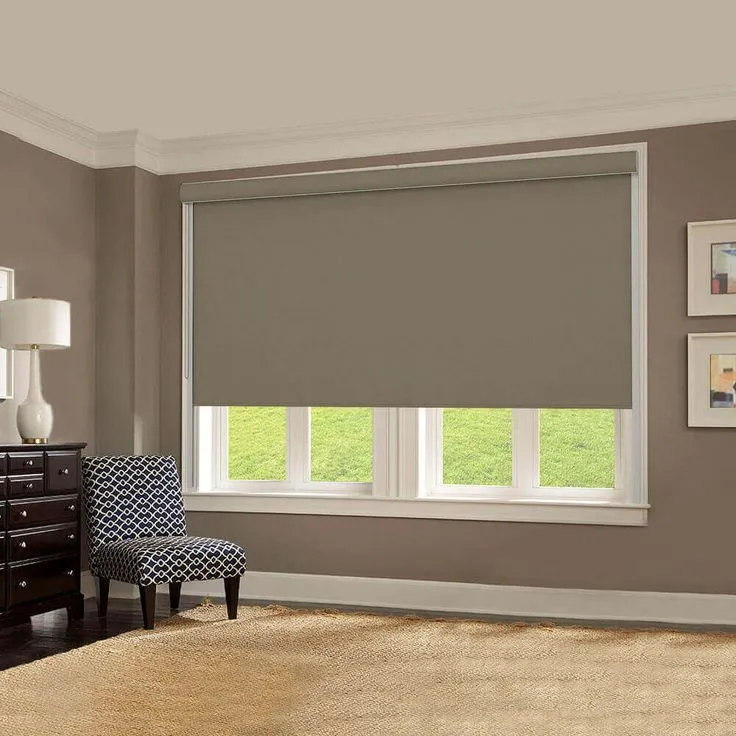
Roller blinds
Roller Blinds are the simplest to measure. In a recess fit the fabric is slightly narrower than the brackets, because the control chain and tube ends sit beyond it. Note which side the chain should hang, and split very wide glass into two or three blinds that meet at a mullion.
Zebra blinds
Zebra blinds are measured like roller blinds, but the looped fabric with its sheer and solid bands usually sits in a cassette that needs extra depth.
Venetian blinds
Venetian blinds use horizontal slats that tilt, so inside a recess they need depth for the slats to turn clear of the glass and handles. Raised Venetian blinds stack at the top, so on a tall window an outside fit above the frame keeps the view clear.
Vertical blinds
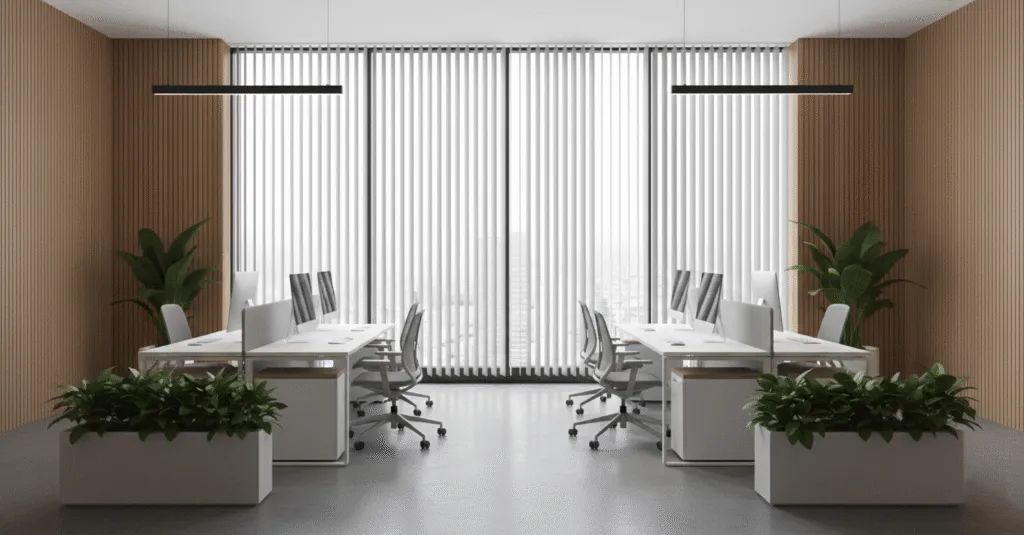
Vertical Blinds suit sliding doors and long spans of glass, with vanes of 89 mm or 127 mm. Measure the track width and decide whether the vanes stack to one side or split both ways, so the stack never blocks a doorway. On a floor length drop, allow about 1 cm of clearance.
Roman blinds
Roman blinds fold into soft pleats that gather at the top, often 15 to 25 cm deep when raised. So Roman blinds are often fixed above the frame, with the folds over the wall rather than the glass.
Motorised blinds
Motorised versions of the roller, Venetian, vertical and Roman styles are measured like the manual ones, with the motor inside the tube or headrail. Note where the nearest power point is, or whether a battery motor suits better.
Shutters
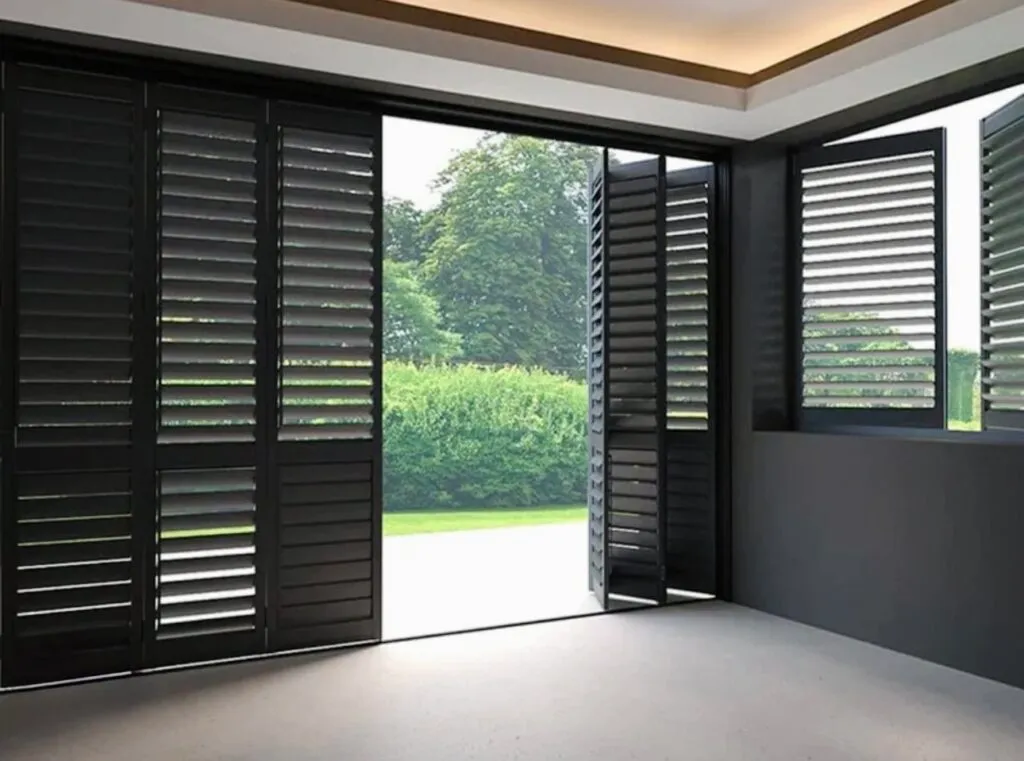
Shutters are measured more like joinery: width and height in three places each, so the frame is built square. Louvres from 63 mm to 114 mm need depth to open, and a surrounding frame can hide an uneven recess.
Blind type quick reference
| Blind type | Usual fit | What to measure | Allowances to note |
|---|---|---|---|
| Roller | Inside or outside | Width, drop, depth, chain side | Fabric narrower than brackets in a recess |
| Zebra | Inside or outside | As roller, plus cassette depth | Deeper headrail |
| Venetian | Inside or outside | Width, drop, depth for slat tilt | Stack at the top |
| Vertical | Outside or ceiling | Track width, drop, stack side | About 1 cm off a floor drop |
| Roman | Often outside | Width, drop, headrail depth | 15 to 25 cm of folds |
| Motorised | Inside or outside | As manual, plus power point | Room for the motor |
| Shutters | Inside or on a frame | Three places each way, diagonals | Depth for louvres |
Worked Example: An Apartment Bedroom
A bedroom window measured for a blackout roller blind:
- Width. Top 1,212 mm, middle 1,208 mm, bottom 1,215 mm. Narrowest: 1,208 mm.
- Drop. Left 1,496 mm, centre 1,500 mm, right 1,502 mm. Longest: 1,502 mm.
- Depth. 95 mm, but a handle projects 60 mm on the right.
- Decision. A dark bedroom with a handle in the way suits an outside recess fit.
- Finished size. Width 1,215 + 100 + 100 = 1,415 mm. Drop 80 + 1,502 + 80 = 1,662 mm.
The order reads 1,415 by 1,662 mm, exact fit, chain on the left.
Common Measuring Mistakes
- Deducting twice. For a recess fit, give the true opening; the maker already takes off the clearance.
- One reading only. Always take three measurements for width and three for height.
- Copying old blinds. They were already made smaller than the recess.
- Not stating the fit. Write “inside” or “outside” beside every window.
- Missing handles and sills that stop a blind closing fully.
Measuring Blinds in Dubai Homes
Light gaps that let in sun and heat
A thin strip of light around a blind brings in heat as well as glare, so the air conditioning has to work harder. In bedrooms and west facing rooms, a generous overlap or side channels keeps the sun out.
Sand and dust
Grit blown in through balcony doors settles on ledges, and a blind that drags on the sill picks it up and wears faster.
Tall villa windows
Double height villa windows need a ladder, a helper and a drop reading at both sides. Blinds this tall are usually motorised, so plan a power point.
Floor to ceiling glass in apartments
Floor to ceiling glass from slab to slab leaves no real window recess, so blinds are usually fixed to the ceiling. Measure the full run, then split it into blinds that meet at a frame; a roller blind can be made up to about 3 m wide.
AC units and window handles
Split AC units are commonly mounted right over a window, where a headrail would go, so measure the clearance below the unit first. Tilt and turn windows have handles that project into the recess, and the blind must clear them.
Uneven recesses
Plaster and tiling are not always true, and checking the diagonals shows how far out a recess is. Where it is well out, an outside fit hides it. For tracks and poles, see how to measure curtains for the curtain side.
Free Measurement With Intex Aura
Measuring yourself is useful for planning, but made to measure blinds are best ordered from figures taken by whoever will fit them. That is why every Intex Aura job starts with a free site visit, in any part of the UAE. We check depth, brackets, handles and AC units and leave free samples with you. A free quote follows, and the same team stays with the job through to installation. Weekend and late visits are available.
Compare styles across our blinds range, and when you have a shortlist, Book a free site visit and leave the tape measure to us.
Measuring Blinds FAQs
How do you measure for blinds inside a recess?
Take the width across the top, middle and bottom and use the narrowest. Take the height down both sides and the centre and use the longest. Give the figures as measured.
How much should an outside recess blind overlap?
About 5 to 10 cm past the opening on each side and above the top. Use 10 cm for a bedroom or blackout blind.
Do I make deductions when measuring blinds?
No. For a recess fit the maker deducts around 1 cm so the blind runs freely. For an outside fit, your figure is the finished size.
How deep should a recess be for an inside fit?
Roller blinds fit a shallow recess, but Venetian blinds and shutters need more so the slats can tilt. Check the depth where the brackets go and look for projecting handles.
Should I measure my old blinds?
No. They were made smaller than the opening, so copying them makes the new blind too narrow. Measure the window instead.
Which fit is best for blackout blinds?
An outside fit with a 10 cm overlap blocks the most light. With a recess fit, side channels close most of the gaps.
Does Intex Aura measure blinds for free?
Yes. We measure every window at no cost when we visit your home, wherever you live in the UAE, and follow it with a free quote.
Inside or outside the recess?
On a free site visit we check every recess, handle and AC unit in person, leave samples with you and send a free quote.