
The main types of blinds are roller, zebra (day and night), Venetian in wood or aluminium, vertical, Roman, blackout, sunscreen and motorised blinds, with window shutters as the solid alternative. In Dubai, the right window blind depends on how much sun the window takes, how much privacy the room needs, and whether it faces steam, sand or a screen.
Blinds work in different ways: some roll, some fold, some tilt and some stack to the side. Below we explain how each works, where it performs best in apartments, villas and offices, and what the UAE climate means for materials, with a quick comparison table to narrow the list.
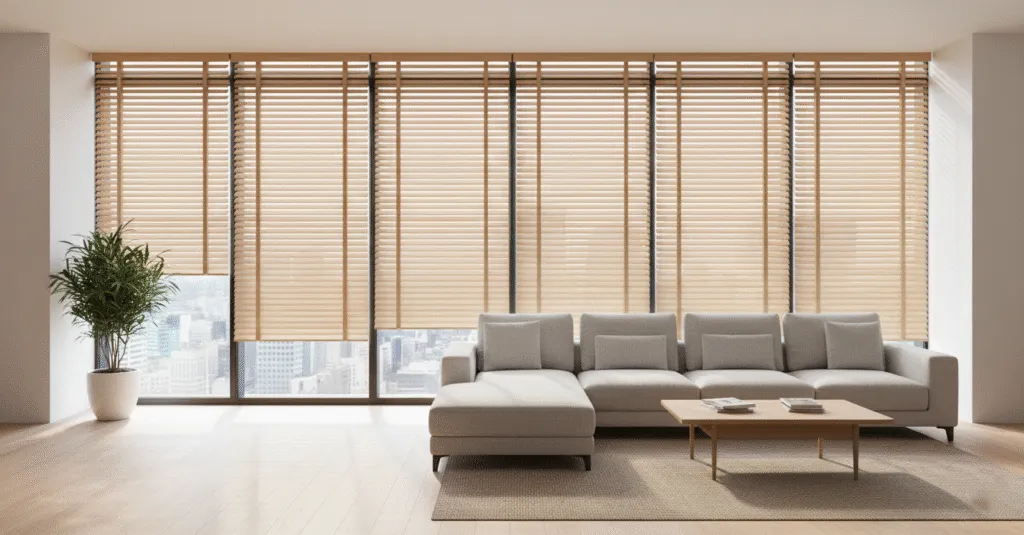
How Window Blinds Control Light
Window treatments fall into three families, and knowing which one you need cuts the choice down fast. All of these window treatments come in many styles:
- Fabric blinds that roll or fold: roller, zebra, Roman, blackout and sunscreen. They give a soft, modern look in a huge variety of fabrics, colours and textures.
- Slatted blinds that tilt: Venetian blinds in wood, faux wood or aluminium, and vertical blinds. They give the finest light control, because you can angle sunlight away without raising the blind.
- Shutters, which are not strictly blinds but solid panels with louvres set into a window frame.
Motorised blinds are not a separate family. A motor can drive almost any design, so the operation is a choice you make on top of the type.
Quick Comparison of the Types of Blinds
| Type | How it works | Light control | Best rooms | Dubai notes |
|---|---|---|---|---|
| Roller blinds | Flat fabric rolls onto a tube | Sheer to full blackout | Almost any room | Pick solution dyed fabric for sunny glass |
| Zebra blinds | Sheer and solid bands slide past each other | Adjustable | Living rooms, bedrooms, home offices | Daytime privacy without losing daylight |
| Wooden Venetian | Timber slats tilt on tapes | Precise angling | Living rooms, studies | Real wood can warp in steam |
| Aluminium Venetian | Thin metal slats tilt and lift | Precise angling | Kitchens, bathrooms, workplaces | Rust free, reflects heat |
| Vertical blinds | Vanes hang and rotate, then stack | Good | Sliding doors, large windows | Gather less dust |
| Roman blinds | Fabric folds into soft pleats | Filtering to blackout with lining | Bedrooms, formal lounges | Keep away from damp |
| Blackout blinds | Dense or coated fabric | Full darkness | Bedrooms, nurseries, media rooms | Beats the early summer sunrise |
| Sunscreen blinds | Open weave mesh | Cuts glare, keeps the view | Lounges, glass walls | Strong heat control |
| Motorised blinds | Any style with a motor | As per the fabric | Tall or hard to reach windows | Close on a schedule |
| Window shutters | Solid panels, tilting louvres | Excellent, plus insulation | Villas, wet rooms in PVC | Highest cost |
Roller Blinds
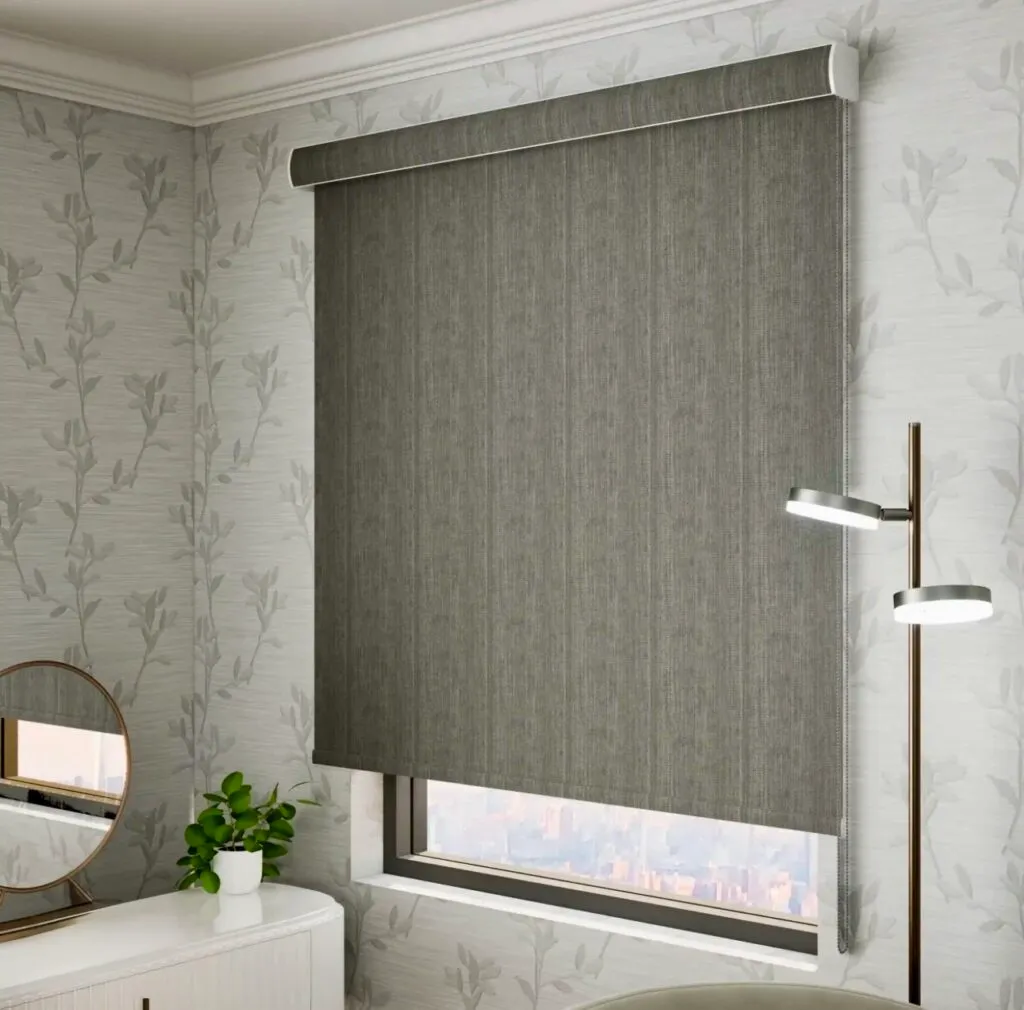
A roller blind is one flat sheet of material on a slim tube fixed above the glass. Lower it with a chain, spring, cordless system or motor and it hangs as a clean panel; raise it and it tucks away almost out of sight. This simple design is why roller blinds, sometimes called roller shades, remain the simplest and best known window blinds across UAE homes.
The fabric decides what the blind does: light filtering, sheer, sunscreen, blackout or wipe clean PVC. That makes roller shades versatile enough for bedrooms, kitchens and home offices alike, and they suit most budgets. For sunny windows, solution dyed and solar reflective fabrics hold their colour far longer under strong UV rays. Our roller blinds are made to measure up to about 3 m wide, so even wide apartment windows look neat.
Works best: nearly anywhere, which is what makes roller shades so popular. Choose PVC in a bathroom and blackout with side channels where you sleep.
Zebra Blinds (Day and Night Blinds)
Zebra blinds use a single loop of fabric printed in alternating sheer and solid stripes, running down the front of the roller and back up behind it. Line up the sheer stripes and daylight comes through; shift them so the solid stripes overlap and the view is closed off. A short pull does it.
That is why day and night blinds are a favourite in Dubai apartments facing other towers. You keep daytime privacy and natural light together, then close them fully at night, and blackout solid stripes are available for bedrooms. Browse our zebra blinds in white, grey, taupe and textured linen looks.
Works best: living rooms, bedrooms and studies where light levels change through the day.
Venetian Blinds: Wooden and Aluminium
Venetian blinds are the classic slatted window blind. The horizontal slats hang on ladder cords or decorative tapes; turn the wand and they tilt, pull the lift cord and the stack rises. Tilting lets you bounce light up to the ceiling or angle it down, which gives finer control than any fabric.
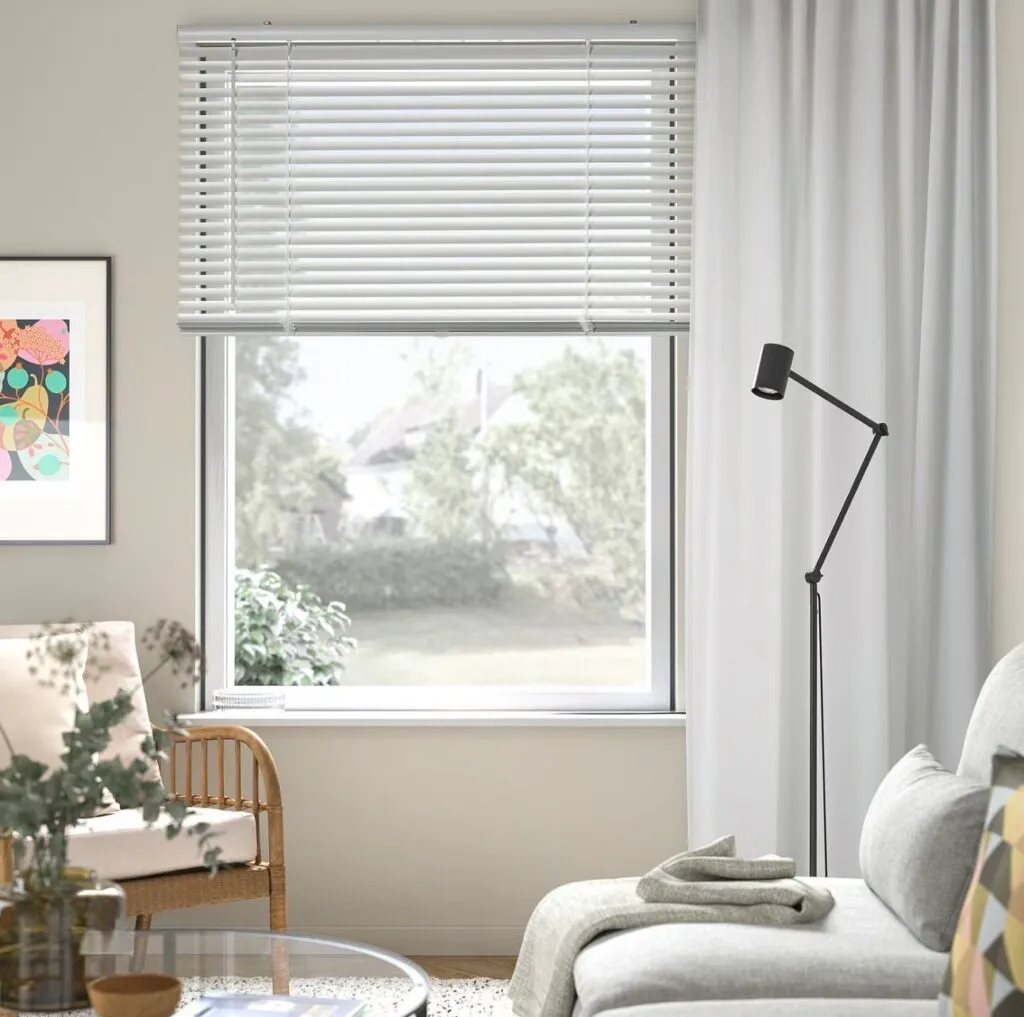
Wood blinds and faux wood
Wood blinds bring warmth and a traditional, natural feel that suits villas, studies and lounges. Basswood and oak are the usual timbers, and wood is a natural insulator, so closed slats help keep a room cooler. The catch is moisture: real wood can warp in steam and humidity, so for wet rooms pick faux wood, a durable PVC or composite material that looks almost identical. Our wooden Venetian blinds come in natural, stained and painted finishes, with slats from 25 mm to 63 mm. Faux wood blinds are the safe, practical pick next to a sink, and they are durable enough for a family kitchen.
Aluminium Venetian blinds
Aluminium slats are thin, light and powder coated, so they are durable and will not rust or crack. They are the practical choice for busy kitchens and offices, and the metal reflects much of the sunlight, helping keep heat out. Perforated slats let a little light through when closed, which is handy in front of screens. See aluminium Venetian blinds in more than 40 colours.
Dubai note: slats catch fine sand. A weekly dust and an occasional wipe with mild soapy water keeps them looking new.
Vertical Blinds
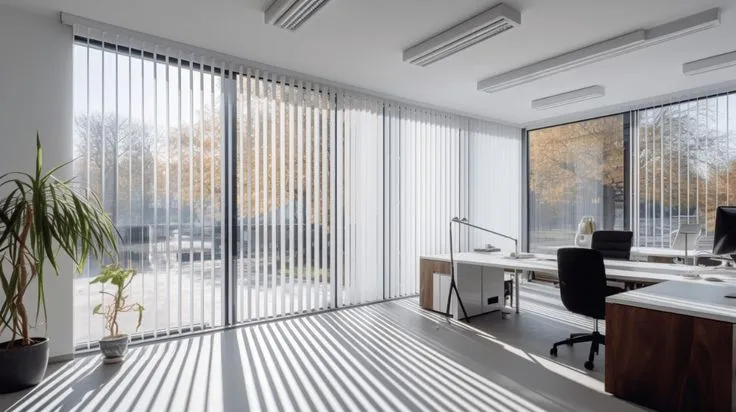
Vertical blinds are made of long vanes hung from a track. Turning the wand angles the vanes against glare, and a pull cord gathers them to one side so you can step through a sliding door. Because they run top to bottom, wide spans do not sag and dust settles on them less.
They are the usual cover for patio doors, balcony sliders and large windows, and they are common in workplaces because they handle screen glare along long glass walls. Fabric vanes suit living spaces, while PVC or vinyl vanes wipe clean in a kitchen. Vertical blinds are one of the most versatile window blinds for wide glass. See our vertical blinds for vane widths and materials.
Roman Blinds
Roman blinds are flat fabric panels that gather into soft, even folds as they rise. Lowered, they lie flat, so they show a pattern better than any other blind and feel closer to a soft furnishing than a functional shade. They suit bedrooms, dining rooms and formal lounges.
The lining changes everything: a standard lining softens light, a blackout lining darkens a bedroom, and an interlining adds insulation. Folds trap moisture, though, so Roman blinds are best avoided in bathrooms, and they need more care because the pleats collect dust.
Blackout Blinds
Blackout blinds use a dense, coated or multi layer fabric that blocks up to 100% of light. Side channels along both edges close the gap where light would leak in, giving a properly dark room. Dubai summer sunrises come very early, so blackout blinds are the top request for bedrooms, nurseries, media rooms and shift workers.
Blackout is a fabric rather than a style, so you can have it as a roller, Roman, vertical or zebra blind. Thermal backing also reflects solar heat, which saves energy, especially on west facing windows.
Sunscreen Blinds
Sunscreen blinds use an open weave mesh that filters harsh sunlight while keeping the outside view. The fabric is graded by openness, usually 1%, 3%, 5% or 10%: lower openness gives stronger glare and heat control, higher openness a clearer view. 3% suits most rooms.
Choose this blind when a sea, garden or skyline view is the point of the room but the glare is too strong to leave the window bare. The mesh screens out much of the UV rays behind the fading of upholstery and flooring, and it reduces reflections on televisions and laptops. Read more on sunscreen blinds, or, if you prefer drapes, read about sun blocking curtains for hot rooms.
Motorised Blinds
Motorised blinds are any blind fitted with a small electric motor in the headrail or tube. You run them by remote, wall switch, phone app or voice control through a smart home hub, and motors can be battery, mains or solar powered.
The real gain here is scheduling. Set the blinds on sunny windows to close before the afternoon heat and the room stays cooler, easing the air conditioning. Motorised blinds have no cord, so they are safer around children and pets, and they make sense for double height villa windows and skylights. Roller, zebra, Roman, vertical and wood blinds can all be motorised in a modern smart home, and voice control lets you close every blind in a room with one command.
Window Shutters
Shutters are made to measure panels hinged to a frame, with louvres that tilt on a rod. Plantation shutters, with their broad louvres, are the most popular style and frame the view when opened. Panels can cover the full height, split into upper and lower tiers, cover just the bottom half, or slide on a track across patio doors.
Materials are hardwood, waterproof PVC and wood composite. PVC will not warp, so it suits bathrooms, kitchens and pool houses, while hardwood gives the warmest finish in villa bedrooms. As a solid layer, shutters insulate better than any other window coverings or shades, keeping heat and street noise out. See our window shutters for finishes and styles.
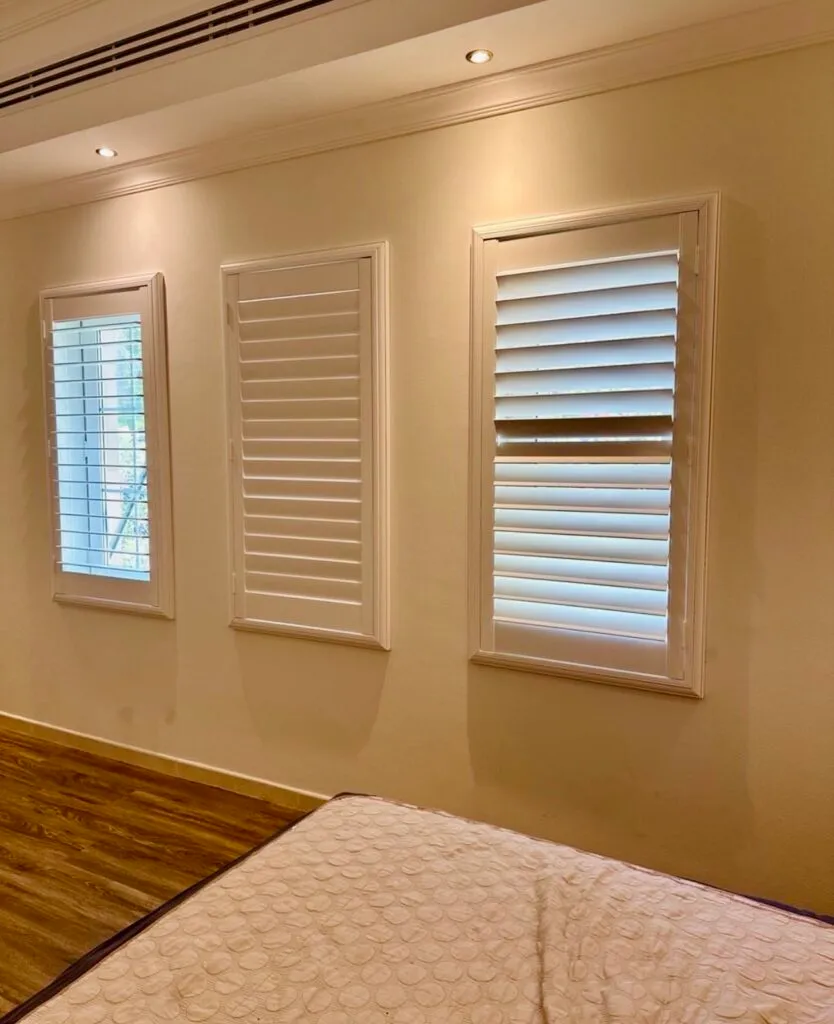
Blinds vs Shutters
The short answer on blinds vs shutters: blinds are more affordable and easier to change, while shutters cost more but last longer, insulate better and become part of the architecture.
| Factor | Blinds | Shutters |
|---|---|---|
| Cost | Lower, suits any budget | Higher, a long term fixture |
| Look | Soft fabric or slim slats, easy to restyle | Solid, architectural, premium |
| Light control | Sheer to blackout, by type | Tilting louvres, very precise |
| Insulation | Good with thermal fabric | Best, a solid layer |
| Moisture | PVC, vinyl and aluminium cope | PVC shutters are waterproof |
| Cleaning | Vacuum fabric, dust slats | Wipe the louvres |
In villas, many owners put shutters in bedrooms and bathrooms and blinds in the main living spaces. In rented apartments, blinds are usually the better pick, since they cost less and are simple to take with you.
Best Blinds for Living Room Windows
The best blinds for living room spaces here balance view, glare and privacy. Most face a large pane and an afternoon sun, so:
- Zebra blinds give flexible daytime light and privacy when other buildings look in.
- Sunscreen roller blinds keep the view while cutting glare on the television.
- Wooden Venetian blinds add warmth and texture in traditional interiors.
- Vertical blinds cover sliding doors to a balcony or garden.
- Bamboo blinds add a woven, natural texture for a relaxed look.
For late evening films, add a blackout layer: a double roller with sunscreen at the front and blackout behind gives both on one window. If you are still weighing fabric drapes against a blind, our curtains vs blinds guide covers that choice.
Choosing Blinds for Other Rooms
- Bedrooms: blackout roller or Roman blinds with side channels, or blackout zebra.
- Kitchens: aluminium, faux wood or PVC rollers that wipe clean of grease.
- Bathrooms: PVC rollers, aluminium slats or PVC shutters; avoid real wood and fabric folds.
- Home offices and workplaces: sunscreen, zebra or vertical blinds to stop screen glare. Our office blinds page shows commercial options.
Made to measure blinds also fit each window exactly, leaving smaller light gaps than ready made sizes.
Sand, Dust and Sun: Caring for Blinds
Fine dust finds its way into every UAE home, so easy maintenance matters as much as style. Roller and zebra fabrics need only a light vacuum with a brush head, aluminium and faux wood wipe down with a damp cloth, and vertical blinds stay cleaner than horizontal ones. Real wood and Roman pleats need the most care. On south and west facing windows, keep blinds lowered at peak hours, because sunlight through glass will fade furniture and floors. Vinyl and PVC slats resist sun damage well.
Choosing Blinds With Intex Aura
No one type wins everywhere, and most homes end up with three or four.
Intex Aura supplies and fits every style in our blinds collection, from roller and zebra to Venetian, vertical, motorised and shutters, for homes and offices across the UAE. After 25 years of designing interiors, one team still looks after every job from survey to fitting. Free samples come with us, every window is measured at no charge, the quote is free, and we can visit in the evening or at the weekend. Book a free site visit for a suggested type at every window.
Types of Blinds FAQs
What are the main types of blinds?
The main types are roller, zebra, Venetian (wooden, faux wood or aluminium), vertical, Roman, blackout and sunscreen blinds. Any of these can be motorised, and window shutters are the solid alternative to all of them.
Which type of blind is best for Dubai's heat?
Sunscreen blinds and blackout blinds with thermal backing do the most to cut heat, glare and energy use. Lowering them in the afternoon on glass that faces west eases the air conditioning, and motorised blinds can do it on a schedule.
What are the best blinds for a living room?
Zebra blinds suit most living rooms because they balance daylight and privacy. Sunscreen roller blinds are best if you want to keep the view, while wooden Venetian blinds add warmth.
Are shutters better than blinds?
Shutters insulate better, last longer and look more architectural, but they cost more. Like most window coverings, blinds are more affordable, come in more fabrics and are easier to change, so they suit rented apartments and offices.
Which blinds are best for bathrooms and kitchens?
Choose PVC roller blinds, aluminium Venetian blinds, faux wood blinds or PVC shutters. They resist steam and humidity and wipe clean, whereas real wood can warp and Roman folds trap moisture.
What is the difference between zebra and roller blinds?
A roller blind is one flat sheet that you raise or lower. A zebra blind has alternating sheer and solid stripes that slide past each other, so you can filter light without raising it.
Which blinds are easiest to clean in a dusty climate?
Roller and zebra blinds are the easiest, needing only a light vacuum. Vertical blinds gather less dust than horizontal slats, and aluminium slats need just a damp cloth.
Not sure which blind suits each window?
Tell us about your rooms, and we will bring samples of every type to a free site visit.