
The best sun blocking curtains for a Dubai home are blackout or thermal curtains in a dense fabric with a white or cream backing, hung wide and high so no sunlight slips around the edges. Drawn before sunlight reaches the windows, they keep rooms cooler, cut glare and take pressure off the air conditioning.
Windows are the weakest point of any home in a UAE summer. Glass lets solar energy straight in, and once that heat is inside, the AC has to work to remove it. This guide covers heat and sunlight only.
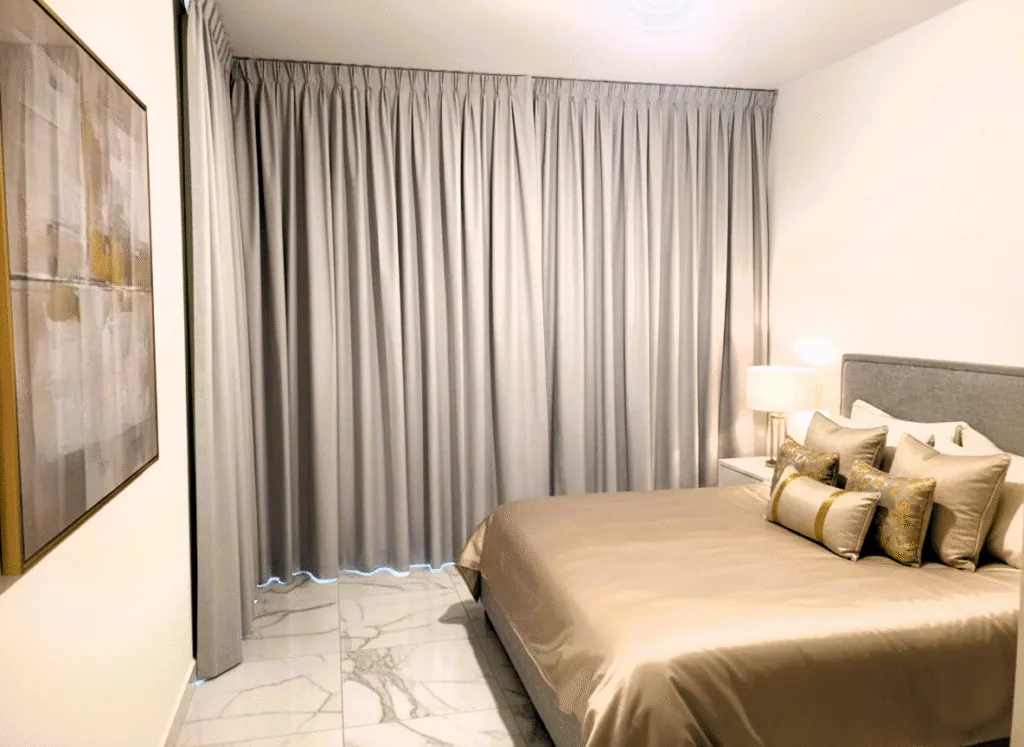
How Sun Blocking Curtains Reduce Heat
Heat reduction curtains work in three ways at once:
- They reflect. A pale, reflective backing turns much of the incoming sunlight back towards the glass.
- They insulate. A drawn curtain traps a layer of still air against the window, and that pocket slows heat transfer into the home.
- They shade. A dense fabric stops direct sunlight landing on sofas and walls, which would otherwise soak up warmth and release it for hours.
The hidden problem is heat radiation from the pane itself. On a July afternoon in Dubai large windows can feel hot to the touch, and that heat radiation reaches you even when no light does. So the layers facing the glass matter as much as the face cloth you see.
Blackout, Thermal and Lined Curtains
Blackout curtains
Blackout curtains stop light completely. Some are a triple weave fabric with a dark yarn running through its centre. Others have a foam backed finish or are acrylic coated on the reverse, and many pair a decorative face cloth with a separate blackout lining. Well made, they can keep out as much as 100% of daylight, the first choice for bedrooms and media rooms.
Darkness and heat control are separate jobs, though. A thin, dark blackout fabric can stop every ray of light and still feel warm on the room side. For heat, pick a heavier triple weave or a blackout lining with a white face towards the window.
Thermal curtains
Thermal curtains add insulation, either a thermal lining or a soft interlining behind the face fabric. That insulating layer slows heat gain through the glass, and thicker insulation means less heat gain overall. Curtains that are both blackout and thermal keep heat out and darken the space together.
Lined curtains
Lined curtains are decorative drapes with a plain cotton or polyester lining sewn to the back. It adds sun protection and helps them hang neatly.
Sun Blocking Curtain Types Compared
| Curtain type | Heat control | Glare | Light let in | Privacy | Best rooms |
|---|---|---|---|---|---|
| Blackout, light backing | High | Stops it | None | Full | Bedrooms, media rooms |
| Thermal (blackout plus interlining) | Highest | Stops it | None | Full | Sun traps, top floor apartments |
| Lined decorative | Medium | Reduces it | Some | Good | Living room, dining room |
| Sheer only | Low | Softens it | Plenty | Daytime only | Spaces that need natural light |
| Sheer plus blackout, double track | High when drawn | Adjustable | Adjustable | Day and night | Most villas in the UAE |
| Sound proof, blackout backing | High | Stops it | None | Full | Rooms on busy roads |
If street noise is part of the problem, sound proof curtains have a dense multi layer build with a blackout backing, so they block light and add insulation while quietening the space.
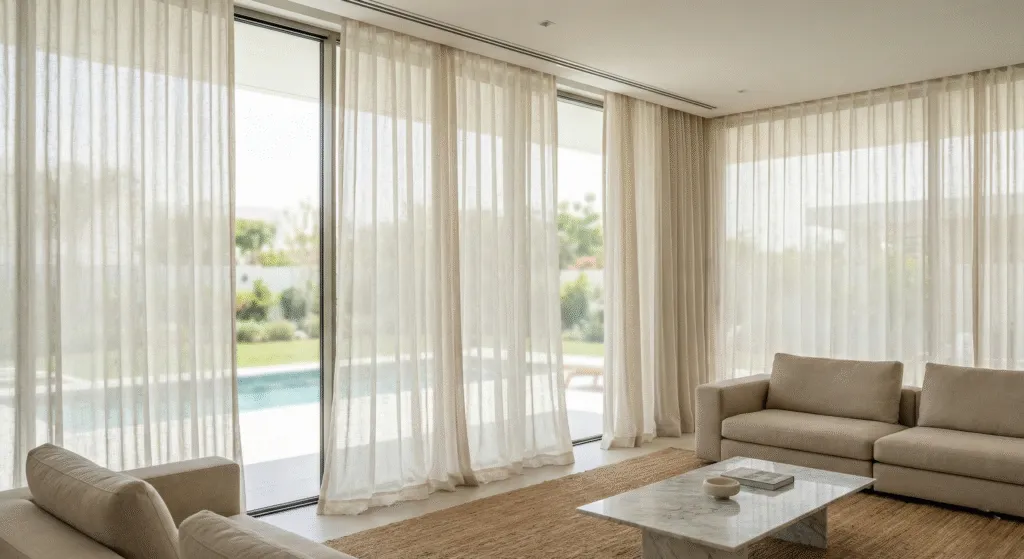
Best Fabrics and Colours for Heat
Fabric choice is where most window treatments succeed or fail.
- Dense weaves win. Tightly woven fabrics stop more sunlight than open weaves. Hold a sample up to a bright window: if you can see light through it, heat will come through too.
- Use a lighter backing. White, cream or silver facing the glass is reflective. Darker linings absorb heat.
- Avoid thin dark fabrics. A thin navy or charcoal curtain with no lining soaks up heat, then raises the room temperature all afternoon. For deep shades, choose a heavy cloth with a pale back.
- Velvet is thick and heavy, giving darkness and thermal comfort.
- Polyester blackout fabric is durable, easy to clean and fade resistant, practical for children’s rooms and rentals.
- Linen and cotton look relaxed, but unlined they let warmth through. Add a thermal lining and they become proper heat reduction curtains.
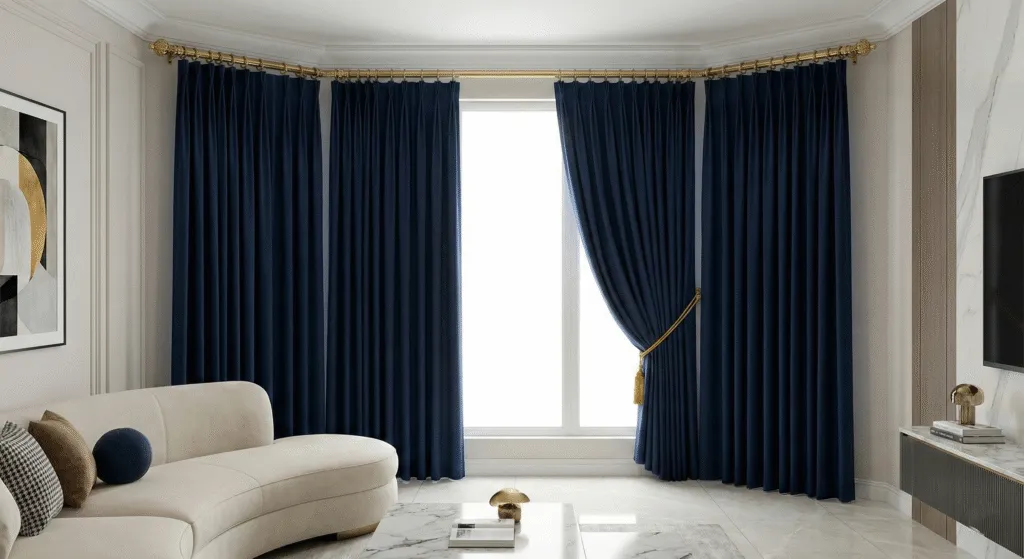
The side facing out matters most, so you can still choose rich darker colours or lighter shades for the room while a reflective white back does the cooling work.
Pair Curtains With Sheers for Daytime
Closed blackout panels make a space dark, and few people want that at noon. The answer is a double track: sheer curtains on the window side, blackout or thermal panels on the room side.
By day, draw the sheer curtains. They soften glare, filter some UV and give daytime privacy in apartments overlooked by the next tower, while letting in natural light. Sheers alone do little against Dubai heat, so add the heavier panels on the hottest afternoons. At night, close both for darkness and sleep.
For a clear view, a blind behind the curtains adds a second barrier. Sunscreen blinds filter as much as 97% of UV and come in openness levels from 1% to 10%, so you keep the skyline while the curtains handle the evening. Our guide to curtains vs blinds explains when to choose one, the other or both.
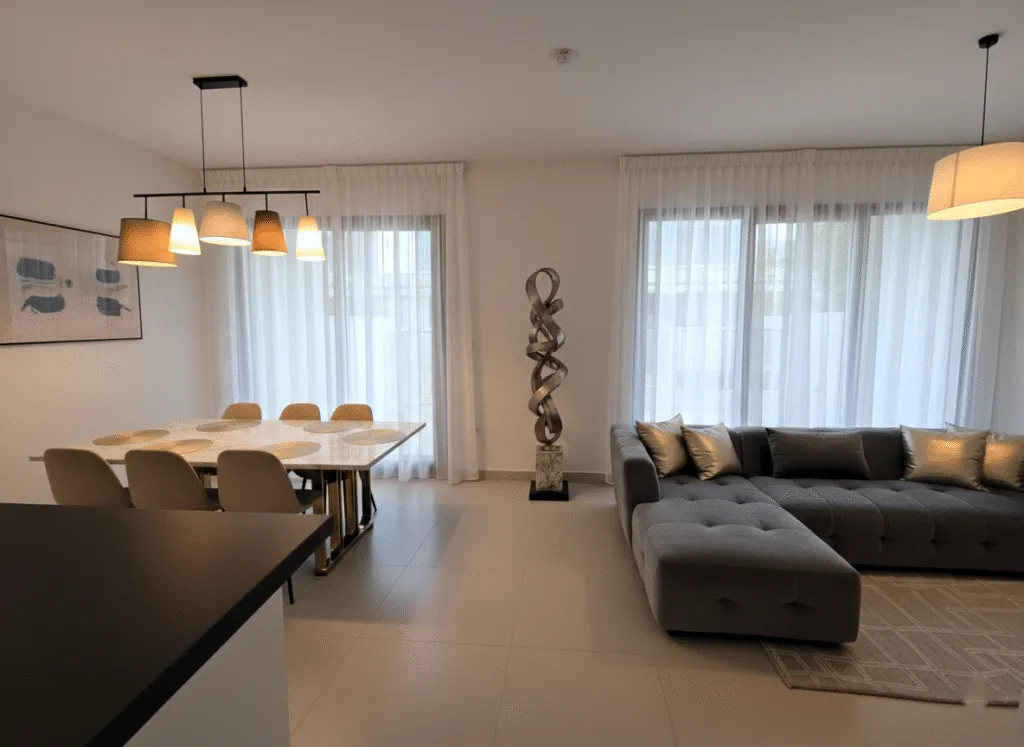
Fitting So Light Does Not Leak
A good fit is what keeps heat out. Light leaking around the sides and over the top brings glare and warmth with it.
- Go wide. Extend the track past the window for a generous overlap onto the wall.
- Go high. Mount it close to the ceiling so no strip of light shows above.
- Close the sides. Wraparound rails, or returns that bring the fabric back to the wall, shut the side gaps.
- Reach the floor. Curtains that just clear the floor stop light and warm air escaping underneath.
- Allow fullness. Curtains about 2 to 2.5 times the window width form deep folds that trap more air and improve coverage.
- Overlap in the middle. Where two panels meet, a small overlap stops a line of light down the centre.
Full coverage starts with accurate numbers, so check our how to measure curtains guide first. Made to measure curtains, cut to your exact width and drop, leave no gaps for the sun to find.
Which Rooms Need Them Most
Orientation decides how much heat each room takes in a Dubai home, and where reflective, heavier curtains pay off.
- West facing rooms take the strongest sunlight late in the afternoon, when the building is already warm. They need full blackout or thermal curtains.
- South facing rooms get sun for much of the day, so an adjustable sheer and blackout pair suits them.
- East facing bedrooms get early morning sun. Blackout curtains keep them dark so you can sleep past sunrise.
- North facing rooms get little direct sunlight and can often manage with lined curtains.
Top floor apartments and villas with double height glass gain heat fastest and need the heaviest window coverings.
Air Conditioning Costs and Summer Comfort
Every bit of solar heat stopped at the glass is heat the air conditioning does not have to remove. In a Dubai summer, when units run most of the day, the AC cycles less, each home reaches a comfortable temperature sooner and energy bills come down. Savings vary with window size, direction and fit.
Timing matters too. Close sun blocking curtains before the sun hits the window, not after the room has warmed, because heat stored in walls and furniture keeps the temperature up for hours.
Curtains work best alongside double glazing, solar film and well sealed frames. Double glazing and solar film cut heat at the glass, and good window treatments add a final barrier behind it. None of them replaces the AC, but together they keep temperatures steadier and energy bills lower for homes in Dubai and across the UAE.
Protecting Furniture, Floors and Art From Fading
Sun also does slow damage. UV rays break down dyes and finishes, so sofas, rugs, cushions, wooden floors and art near a sunny window gradually lose colour, often unevenly.
Blackout and lined curtains stop UV completely once drawn, while sheers and sunscreen blinds reduce it and still let light in. Use these window treatments on the hottest side of the home through the brightest hours to give your furniture and furnishings real protection. Choosing a new floor for a sunny lounge? Our living room flooring ideas cover finishes that cope with sun.
Fine UAE dust settles on curtains quickly, so vacuum them every few weeks with a soft brush.
Get Curtains That Keep the Sun Out
Intex Aura has 25 years in interior design and makes made to measure window treatments for homes across the UAE. One team handles everything from survey to fitting: a free site visit, free measurement, free fabric swatches to test against your own windows, then a free quote. Weekend and evening visits are available, and we protect your floors and take the packaging away.
For bedrooms and west facing rooms, start with our blackout curtains. To keep the view while cutting glare, add sunscreen blinds behind them. For sheers, linen, velvet and every other fabric, browse the curtains collection. Book a free site visit so we can check which way each window faces before recommending anything.
Sun Blocking Curtains FAQs
Do sun blocking curtains really keep a room cooler?
Yes. Drawn during the day, they stop direct sunlight and solar heat before it spreads, so the room stays cooler. The AC then works less.
Are blackout curtains the same as thermal curtains?
No. Blackout curtains stop light, while thermal curtains have an insulating lining or interlining that slows heat. For a hot room, choose curtains that combine both.
What colour curtains are best for keeping heat out?
The side facing the window matters most. A white, cream or silver backing reflects heat, so the face can be any of the colours you like. Avoid thin dark fabrics with no lining.
Which fabric blocks the most heat?
Tightly woven fabrics with a blackout or thermal lining keep heat out best. Velvet and heavy polyester work well, and linen or cotton perform well once lined.
Do sheer curtains block heat?
Only a little. Sheers soften glare, filter some UV and give daytime privacy, but on the hottest afternoons they need blackout or thermal curtains behind them.
How do I stop light coming in around the sides of curtains?
Make the track wider than the window, mount it near the ceiling and use wraparound rails or returns. Curtains should reach the floor and overlap in the middle.
Which rooms need sun blocking curtains most?
West facing rooms, which take the hottest afternoon sun, need them most, followed by south facing rooms and east facing bedrooms. Top floor apartments also gain heat fast.
Will sun blocking curtains stop furniture fading?
Yes, when closed. Blackout and lined curtains stop UV rays reaching sofas, rugs, floors and art, while sheers or sunscreen blinds reduce fading and still let light in.
Rooms too hot in the afternoon?
Tell us which way your windows face, and we will bring blackout and thermal samples to your home and follow up with a free quote.