
The best flooring for kitchen spaces in Dubai is porcelain tile or SPC vinyl, because both are waterproof, durable and easy to clean. Choose porcelain for heat resistance and the longest life, and SPC for a floor that is warmer underfoot and can go straight over your existing tiles.
Other kitchen flooring options can work too, from sheet vinyl and LVT to natural stone, terrazzo and epoxy, but each has a weak point once grease, spills and hot pans come into play. This guide covers what a kitchen floor has to survive, how each material performs, how tiles vs vinyl flooring compares, and what local sand, humidity and air conditioning change.
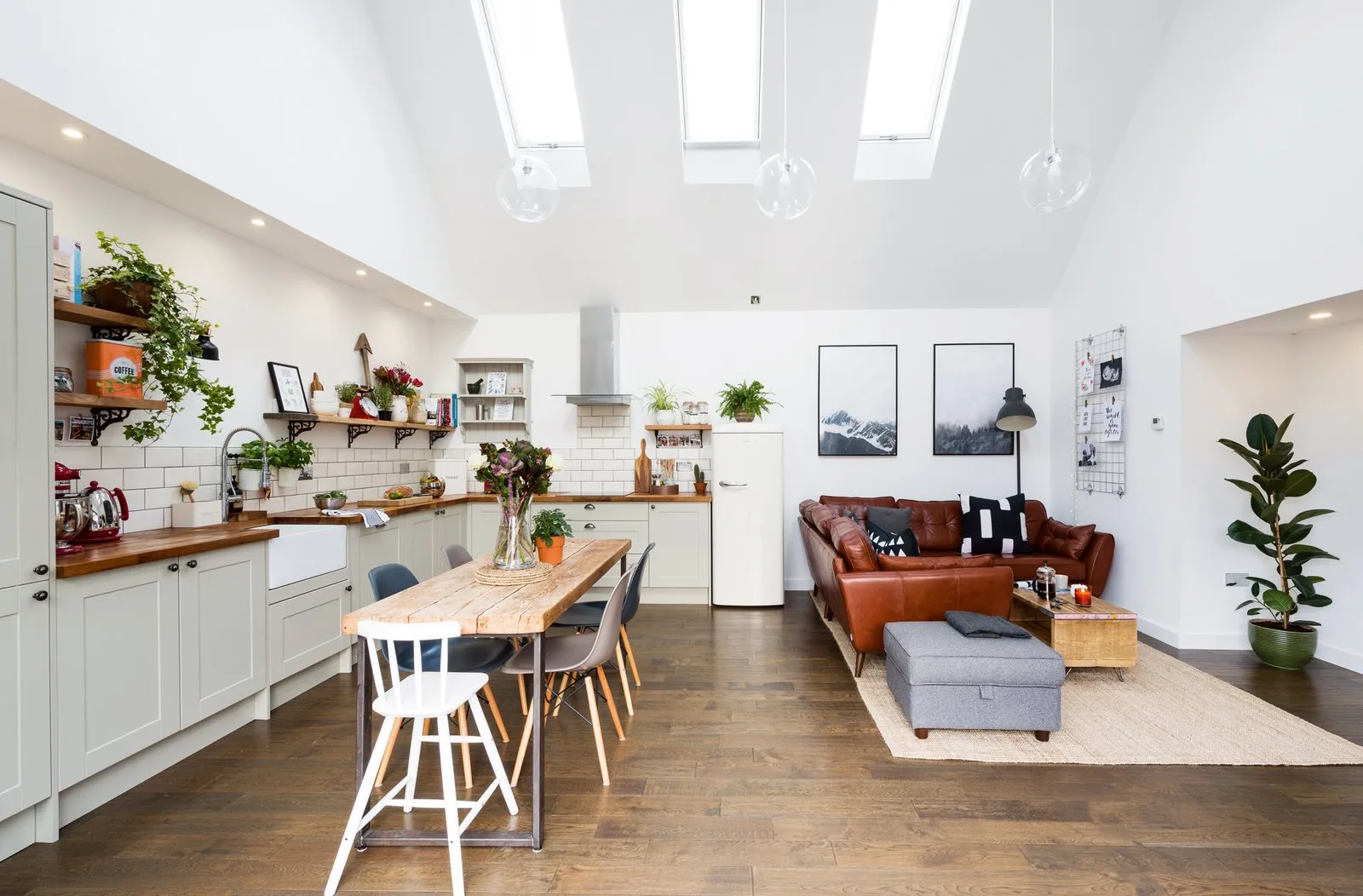
What Makes a Good Kitchen Floor
A kitchen is the hardest working room in the home. Before you look at colours, patterns and aesthetics, check every material against the jobs it does daily.
- Water and moisture. Sinks drip, dishwashers leak and mopping wets the surface every day. The floor should be waterproof, or water resistant with tight joints, so moisture never reaches the subfloor.
- Grease and stains. Cooking oil, turmeric and coffee land on the floor. A non porous surface wipes clean, while porous stone and open grout soak up grease.
- Dropped pans and plates. A hard surface survives a dropped cast iron pan, but plates break on it. A softer one saves the crockery but can dent.
- Standing comfort. If you cook for hours, a floor with some give is kinder to feet, knees and backs.
- Slip resistance. Wet, oily floors cause falls, especially with children and older relatives at home. Look for a matt or textured finish, or a rating of R10 or above.
- Heat. Hot oven trays and splashes of oil near the hob can scorch some finishes.
- Hygiene. Fewer joints mean fewer places for dirt and mould, which keeps the room hygienic with simple cleaning.
- Flow. In an open plan home the kitchen floor is often the living room floor too, so it has to suit both.
Kitchen Flooring Options Compared
The table rates the main kitchen floors against those demands. The right choice depends on the room, the budget and how you cook.
| Material | Water | Heat and stains | Underfoot | Maintenance | Relative cost | Best for |
|---|---|---|---|---|---|---|
| Porcelain tile | Waterproof | Excellent | Hard, cold | Low, grout needs care | Medium | Busy family kitchens |
| Ceramic tile | Glazed surface only | Good | Hard, cold | Low to medium | Affordable | Light use floors |
| SPC vinyl | 100% waterproof | Good, avoid hot pans | Warm, quiet | Very low | Affordable | Apartments, over existing tiles |
| LVT | Water resistant, waterproof when glued | Good, avoid hot pans | Softest | Very low | Affordable | Comfort and realistic wood |
| Sheet vinyl | Waterproof, almost seamless | Fair | Soft | Very low | Lowest | Rentals, utility rooms |
| Laminate | Water resistant ranges only | Good surface | Warm | Low | Affordable | Dry kitchens, careful use |
| Engineered wood | Not waterproof | Fair | Warm | Medium | Expensive | Low spill open plan kitchens |
| Solid wood | Unsuitable near water | Fair | Warm | High | Expensive | Not recommended |
| Marble | Sealed only | Heat yes, acids etch | Hard, cold | High | Expensive | Luxury villa kitchens |
| Granite | Sealed only | Very good | Hard, cold | Medium | Expensive | Heavy cooking |
| Terrazzo | Sealed only | Very good | Hard, cold | Medium | Expensive | Statement floors |
| Epoxy or microcement | Seamless | Good | Hard | Low | Medium | Modern minimal kitchens |
Porcelain and Ceramic Tiles
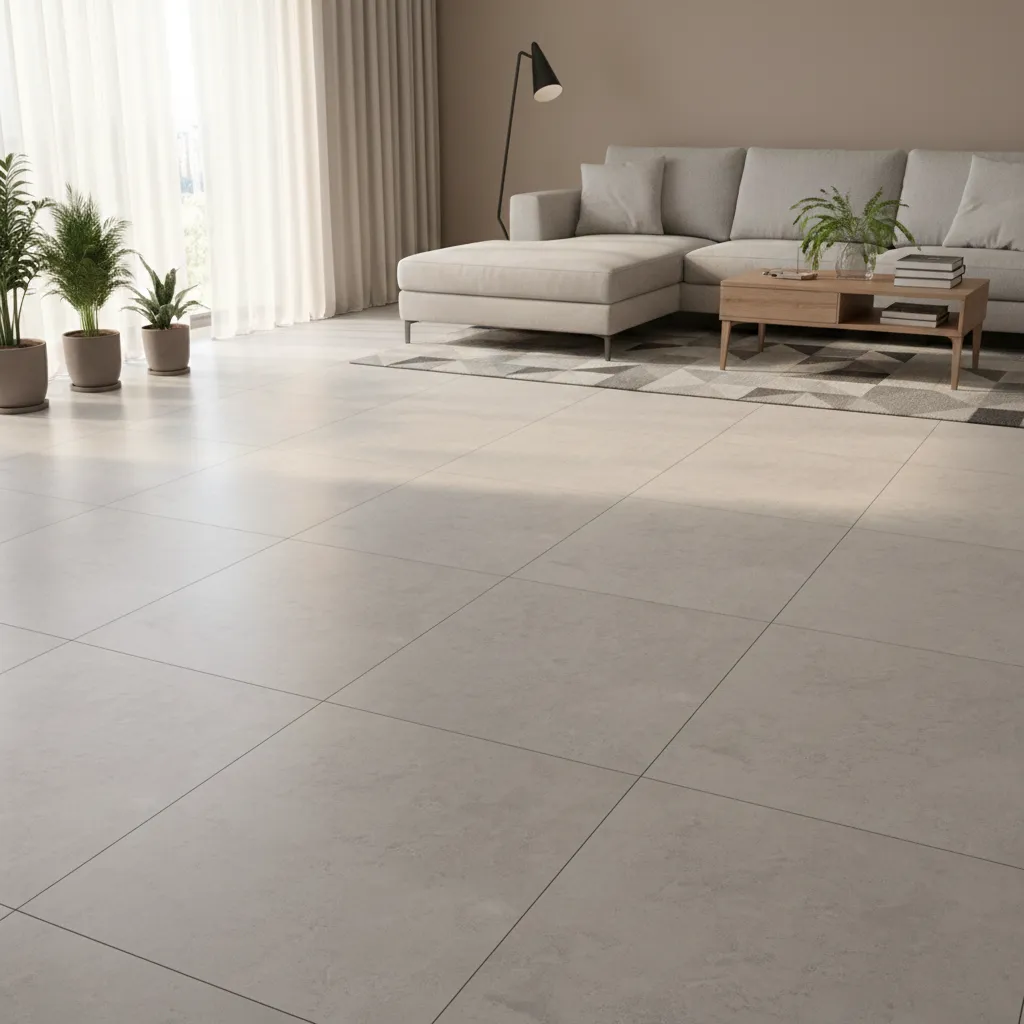
Tile is the classic kitchen flooring across the UAE. Porcelain tile is fired hotter than ceramic, so it is denser, absorbs almost no water and handles heavy foot traffic for decades. It is durable, resists stains and never needs refinishing, and large format porcelain copies marble, concrete and wood with fewer joints to clean. For durability in a high traffic family kitchen, little else comes close.
Ceramic tile is softer and more porous under its glaze, and chips show the clay colour, so porcelain is the more practical floor choice.
Tile has three drawbacks. It is cold and hard, so standing is tiring and dropped glasses rarely survive. It is slippery when wet unless you choose a matt or textured finish. And the grout lines trap grease and dust, so grout should be sealed or picked in a darker shade. Installation is slower too, with adhesive, levelling and grouting, and it is dusty work if old tiles have to come up.
SPC Flooring: Rigid Core Vinyl
SPC (stone plastic composite) is the vinyl flooring most homeowners now ask about for kitchens. Its rigid core blends limestone powder with PVC, so the plank is 100% waterproof and does not swell, warp or shrink with heat or air conditioning. A clear wear layer protects a printed wood or stone design, and an attached IXPE or EVA underlay below makes it quieter and warmer than tile.
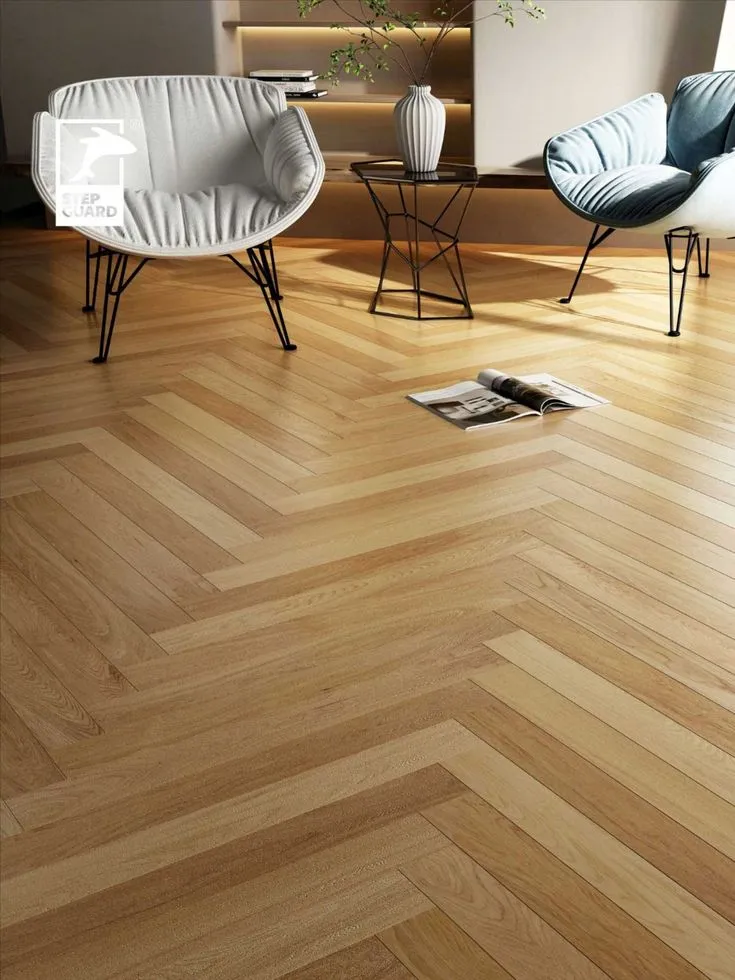
For a kitchen, choose a wear layer of 0.5 mm or more; it keeps the floor scratch resistant under chairs, pets and tracked in sand. SPC planks are 4 mm to 7 mm thick, and the click lock edges allow a floating installation with no glue. Because the core is rigid, SPC can go over flat, sound tiles, which is why it is so popular when a kitchen is updated in an occupied home. Finishes include oak and walnut in straight plank and herringbone patterns, and stone look SPC tiles copy marble and concrete without any grout.
The weak points are heat and point loads. A hot pan set straight down can mark vinyl, and a heavy fridge dragged across it can dent the surface, so use trivets and lift appliances rather than sliding them.
LVT and Sheet Vinyl
LVT (luxury vinyl tile) is built on a flexible PVC core, which makes luxury vinyl the softest of the hard floors, welcome if you stand at the hob for hours. It resists water through its whole thickness, and glued down with sealed edges it copes with kitchen spills as well as SPC does. The trade off is that a flexible plank shows bumps beneath it, so the base needs careful levelling. For more on the two vinyl types, read our guide to SPC vs LVT.
Sheet vinyl comes in rolls several metres wide, so a small kitchen can often be covered in one piece. With few seams, and joints that can be welded, water has almost nowhere to get in. It is the best waterproof choice on a tight budget and suits rentals and laundry rooms, but thin sheet vinyl marks more easily under heavy appliances than SPC.
Laminate in the Kitchen
Laminate flooring prints a wood design over a core of compressed fibreboard. The surface is tough, rated AC3 to AC5, but the core swells if water sits in the joints, and a leaking dishwasher can cause lasting damage to the boards.
Water resistant laminate with sealed cores and treated joints is workable where spills are wiped quickly, and it is warm and realistic. Anywhere water stands, vinyl is safer, as our laminate vs vinyl flooring guide explains.
Engineered and Solid Wood
Real hardwood brings natural warmth, and many people want one wood flooring finish through the kitchen and living room. Solid hardwood is the riskiest of the wood options: standing water and steam make boards swell, cup and stain, and the swing between humid air and dry air conditioning moves them even without spills.
Engineered wood is more stable because its layered core resists movement, and a factory lacquer copes with light splashes. It is more durable than many expect but still not waterproof, so it suits open plan kitchens with a small cooking zone, a mat at the sink and spills cleaned at once. Any hardwood dents under dropped pans and needs refinishing over time, so expect more maintenance than tile or vinyl.
Natural Stone and Marble
Natural stone gives a timeless look and handles heat better than any other floor. Marble is the favourite in villas, but it is porous and calcium based, so lemon juice and vinegar etch the polish and oil can stain it. Maintenance is ongoing, with regular resealing, and polished marble is slippery when wet, so a honed finish is safer.
Granite is harder and less porous, and its durability makes it the more forgiving stone for heavy cooking. Stone materials are hard underfoot, heavy, and among the most expensive floors to supply and lay.
Terrazzo, Epoxy and Microcement
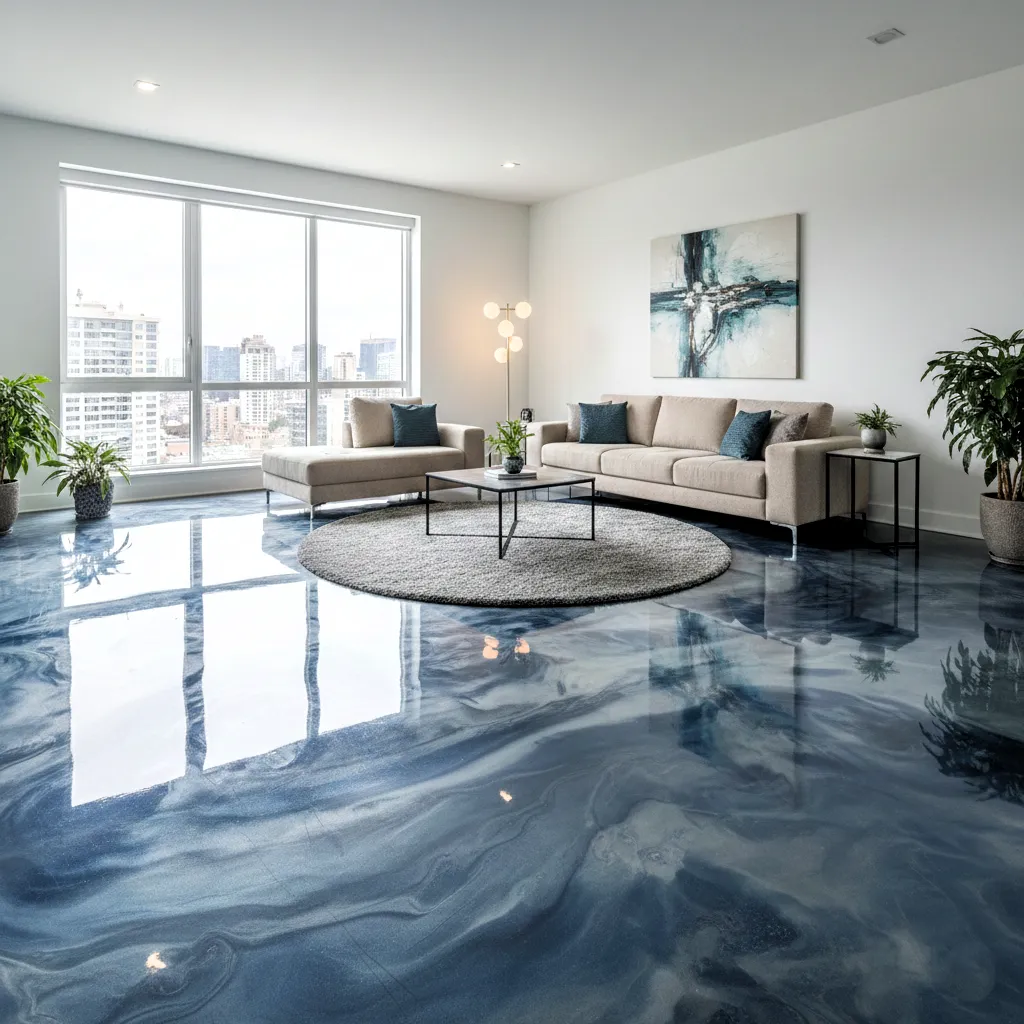
Terrazzo is made from marble or glass chips set in cement or resin, then ground and polished. It is extremely durable, comes in almost any colour and lasts for decades, but it needs sealing against grease and a honed finish for grip.
Epoxy and microcement give one seamless surface with no joints, so dirt has nowhere to hide. Epoxy resists chemicals, while microcement can coat concrete or existing tiles in a thin layer. Both are hard, both need an anti slip additive, and both depend on skilled installation over a sound, dry concrete screed. Polished concrete, where the slab itself is ground and sealed, gives a similar industrial look.
Tiles vs Vinyl Flooring Head to Head
Most people choosing the best flooring for kitchen use end up weighing porcelain against SPC or LVT. Here is how tiles vs vinyl flooring compares where it counts.
| Factor | Porcelain tiles | SPC or LVT vinyl |
|---|---|---|
| Water | Waterproof, grout needs sealing | SPC fully waterproof, LVT water resistant |
| Heat | Unaffected by hot pans | Can mark under hot pans |
| Durability | Decades, can crack under impact | Long life with a thick wear layer, can dent |
| Comfort | Hard and cold | Warmer, softer, quieter |
| Dropped items | Plates break | Crockery often survives |
| Installation | Adhesive and grout, slower | Click or glue, over existing tiles |
| Maintenance | Clean and reseal grout | Sweep and damp mop |
| Cost | Higher once laying is included | Usually lower |
Choose porcelain if you cook with a lot of heat and oil, want the longest life, or are replacing the floor down to the slab. Choose vinyl if comfort and quiet matter, you want a wood look, or you want new floors without breaking out the old ones.
Dubai Factors for Kitchen Floors
Humidity and air conditioning. Coastal humidity, cooking steam and air conditioning running most of the year make wood based flooring expand and shrink, and trapped moisture can damage it. Tile, stone and SPC flooring stay stable, which is why they dominate local kitchens.
Sand and dust. Fine sand tracked in on shoes acts like sandpaper. A strong wear layer, door mats and regular sweeping protect any floor.
Villas. Villa homeowners often have a separate wet kitchen and doors to the garden, so large format porcelain or stone usually runs through the ground floor, with SPC where comfort matters.
Apartments. In an apartment, noise and weight matter more. Thin SPC with an attached underlay is quieter than tile for neighbours below, and planks of 4 mm to 5 mm usually fit under existing doors without trimming.
Laying over existing tiles. Many kitchens already have sound ceramic tiles. If they are level and firmly bonded, SPC or glued LVT can go on top, saving demolition and days without a kitchen during a kitchen renovation. Loose tiles must be fixed first, and the extra height checked against doors and appliances.
Fitting Floors Around Cabinets and Appliances
In any kitchen renovation, how the flooring meets the units matters as much as the material.
- Floating floors stop at the cabinets. SPC, laminate and click LVT should never be trapped under fixed cabinets or an island, because a floating floor needs to move. Fit the units first and run the floor up to the plinths, with an expansion gap hidden behind them.
- Tile and glued floors can go under. Porcelain, stone and glued vinyl can run under the units, which makes a later layout change easier.
- Floor under appliances. Continue the floor under the dishwasher and fridge spaces so they can be pulled out for service, and check they still slide under the worktop.
- Seal the wet zones. Run a flexible sealant along the sink run and around pipes so water cannot creep under the edge.
- Plan the transition. One floor through kitchen and living area with no threshold makes the space feel larger; where materials change, use a flush profile at the end of the island.
Choosing the Best Flooring for Kitchen Use in Your Home
For most homes the practical shortlist is short. Porcelain is the best flooring for kitchen use when heat resistance and durability come first; SPC suits comfort, a wood look and laying over old tiles; LVT and sheet vinyl are softer, affordable options; and stone, terrazzo or epoxy suit owners happy to trade upkeep for looks.
Intex Aura brings 25 years of interior design experience to homes all over the UAE. Our team measures the room and brings free samples so you can see each floor in your own light, one team handles survey to fitting, and floors are protected and packaging removed at the end. Explore our flooring range, see our waterproof SPC flooring planks and tiles, or plan floor, cabinets and appliances together with a kitchen renovation. Book a free site visit and we will send you a free quote.
Kitchen Flooring FAQs
Which is the best flooring for kitchen use in Dubai?
Porcelain tile and SPC vinyl are the best flooring for kitchen use in Dubai. Both are waterproof, stable in heat and humidity, and easy to clean. Porcelain handles heat best, while SPC is warmer, quieter and can go over existing tiles.
Is vinyl or tile better for a kitchen floor?
Tile lasts longer and resists hot pans, but it is hard, cold and breaks anything dropped on it. Vinyl is warmer and softer, and SPC is fully waterproof, but heat can mark it. Pick tile for heavy cooking and vinyl for comfort and quicker fitting.
Is laminate flooring good for kitchens?
Standard laminate is not ideal because its fibreboard core swells if water gets into the joints. Water resistant laminate with sealed joints can work if spills are wiped quickly, but SPC or LVT is safer by the sink.
Can you put wood flooring in a kitchen?
Engineered hardwood can work in an open plan kitchen with low spill risk. Solid wood is not recommended because water and humidity make it swell. Wood look SPC or LVT gives the same appearance without the risk.
Can new flooring be laid over existing kitchen tiles?
Yes, if the tiles are level, sound and firmly bonded. SPC and glued LVT can go directly on top, avoiding demolition and dust. Check that doors and the dishwasher still clear the new height.
What is the most slip resistant kitchen floor?
Matt porcelain rated R10 or higher, honed stone and textured SPC or sheet vinyl all give good grip. Polished marble, glossy tiles and epoxy without an anti slip additive are the most slippery when wet.
Should flooring go under kitchen cabinets?
Floating floors such as SPC and laminate should stop at the plinths with an expansion gap. Tile, stone and glued vinyl can run under the units.
Is marble a good kitchen floor?
Marble looks luxurious and handles heat, but acids such as lemon juice etch it and it needs regular sealing. Granite or marble look porcelain is more forgiving.
Planning new floors for your kitchen?
Tell us about your kitchen and how you cook, and we will bring free samples and put together a free quote for you.