
SPC and LVT are both luxury vinyl, and the real difference is the core: SPC flooring is built on a rigid stone plastic composite of limestone powder, PVC and stabilisers, while LVT flooring (luxury vinyl tile) has a flexible PVC core. For most Dubai villas, sunny living areas and kitchens, SPC is the safer choice; LVT suits bedrooms and apartments where a softer, quieter floor matters more.
Both give a wood or stone finish from a printed design layer under a clear wear layer, so the SPC vs LVT flooring decision comes down to heat, the subfloor and daily life in your home.
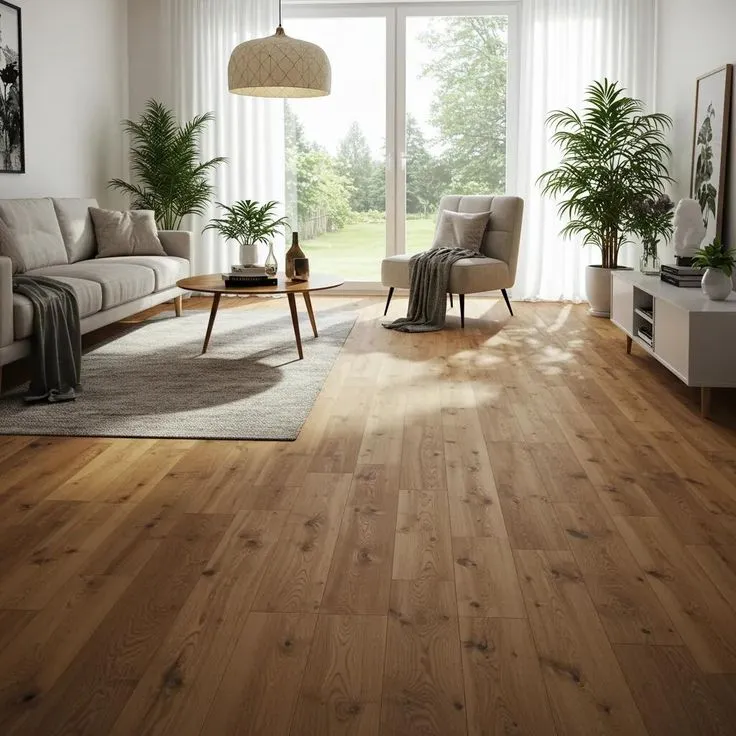
SPC vs LVT Flooring at a Glance
| Feature | SPC flooring | LVT flooring |
|---|---|---|
| Core | Limestone powder, PVC and stabilisers | Flexible PVC |
| Usual thickness | About 4 to 8 mm | About 2 to 5 mm |
| Fitting | Floating click lock | Glue down, loose lay or click |
| Water | 100% waterproof | Water resistant |
| Heat and sun | Very stable | Stable when glued down |
| Subfloor | Bridges small imperfections | Needs a smooth, level base |
| Underfoot | Firm | Softer and warmer |
| Dents | Better under heavy furniture | Can mark under point loads |
| Cost | Slightly higher | Usually slightly cheaper |
The Core Difference Between LVT and SPC
The stone plastic composite in SPC is dense and does not bend, so each plank keeps its shape and the click joints stay tight. That rigidity gives SPC flooring its dimensional stability, its resistance to dents and its tolerance of small subfloor imperfections. LVT is thinner vinyl that follows whatever is beneath it. Glued to a smooth screed it lies completely flat, and single tiles can be lifted, which is why glue down LVT is common in busy offices and shops.
Wear Layer and Thickness
Total thickness says little about durability. The wear layer on top takes the scuffs: 0.3 mm suits a guest room, 0.5 mm suits hallways and a family kitchen, and 0.7 mm suits high traffic or commercial flooring. A thick SPC plank with a thin wear layer can wear faster than slim LVT with a heavy one, so compare that figure first, for residential and commercial flooring alike.
Water, Humidity and Air Conditioning
SPC has a mineral core that does not absorb water, so it is waterproof right through and ideal for bathrooms and laundry rooms. LVT is water resistant; glued down with sealed edges it handles spills and mopping well, though standing water should be wiped up. Neither floor fixes damp, so moisture in the screed must be checked first, because trapped moisture under vinyl leads to mould and loose joints. Dubai humidity and constant air conditioning trouble vinyl flooring far less than timber, but let the boxes acclimatise in the room with the AC running before fitting.
Heat and Sun: The LVT vs SPC Deciding Factor
Floor to ceiling glass can heat a strip of floor well above room temperature while the rest stays cool. The rigid core of SPC copes with these temperature changes with little movement, so it resists gapping and warping and gives better stability in a sunny Dubai living room. Flexible LVT also handles Dubai heat and air conditioning well, but in a room with strong direct sun it is best glued down rather than laid as a floating floor, so every tile stays put. With both, leave the expansion gap the maker asks for at every wall, hidden by skirting. Direct sunlight can make any vinyl fade over time; the UV cured top coat slows fading, and blinds at midday protect floor and furniture alike.
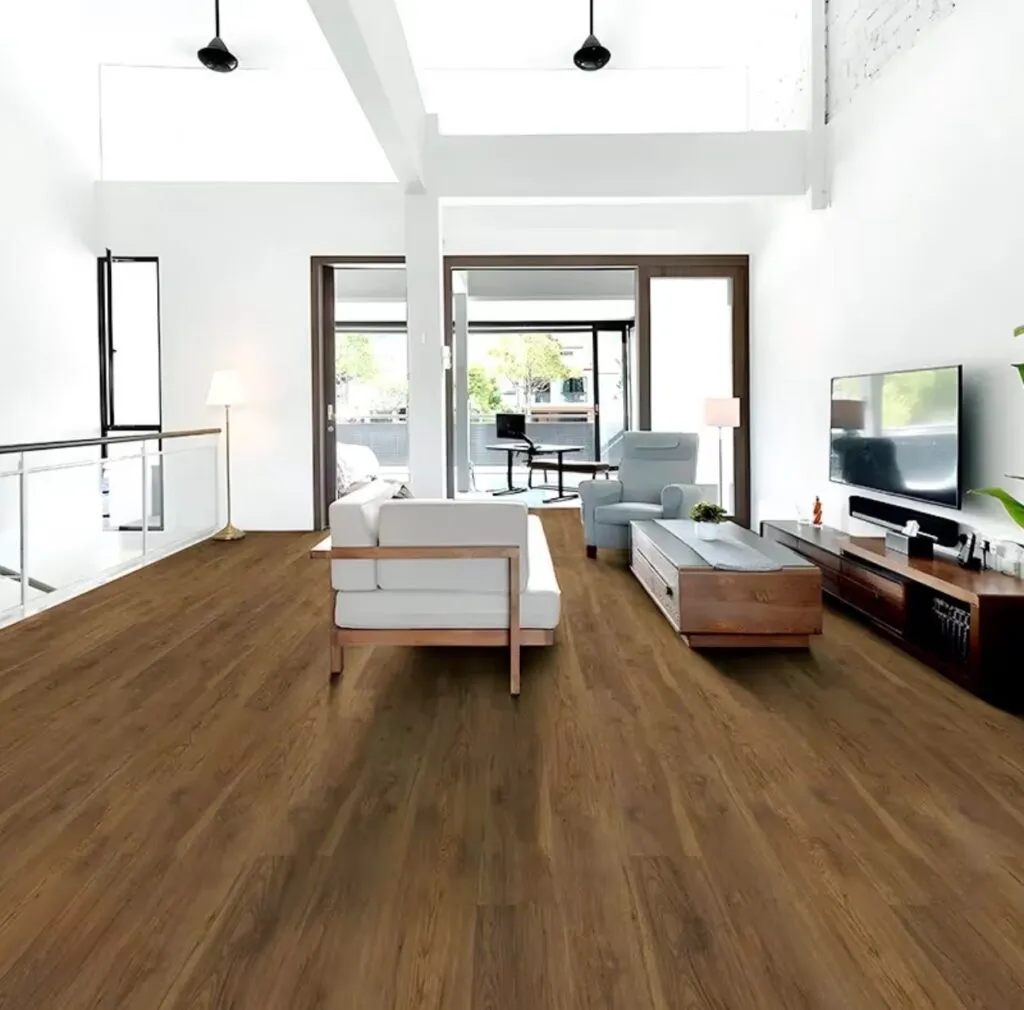
Subfloor, Existing Tiles and Installation
Good preparation decides how either floor looks. SPC installation is floating: planks click together over an underlay and are not fixed down, and the stiff boards bridge minor dips and grout lines, which suits uneven subfloors. Glue down LVT installation shows every bump, so the base is usually smoothed with a levelling compound, and the right adhesive is chosen for the screed; the wrong adhesive is a common cause of lifting tiles.
Both floors can go over existing tiles in most Dubai homes if the tiles are level, dry and firmly bonded, which avoids the dust of breaking out the old floor. Slim glue down LVT barely raises the floor, so doors rarely need trimming, while click lock SPC can be walked on as soon as it is down.
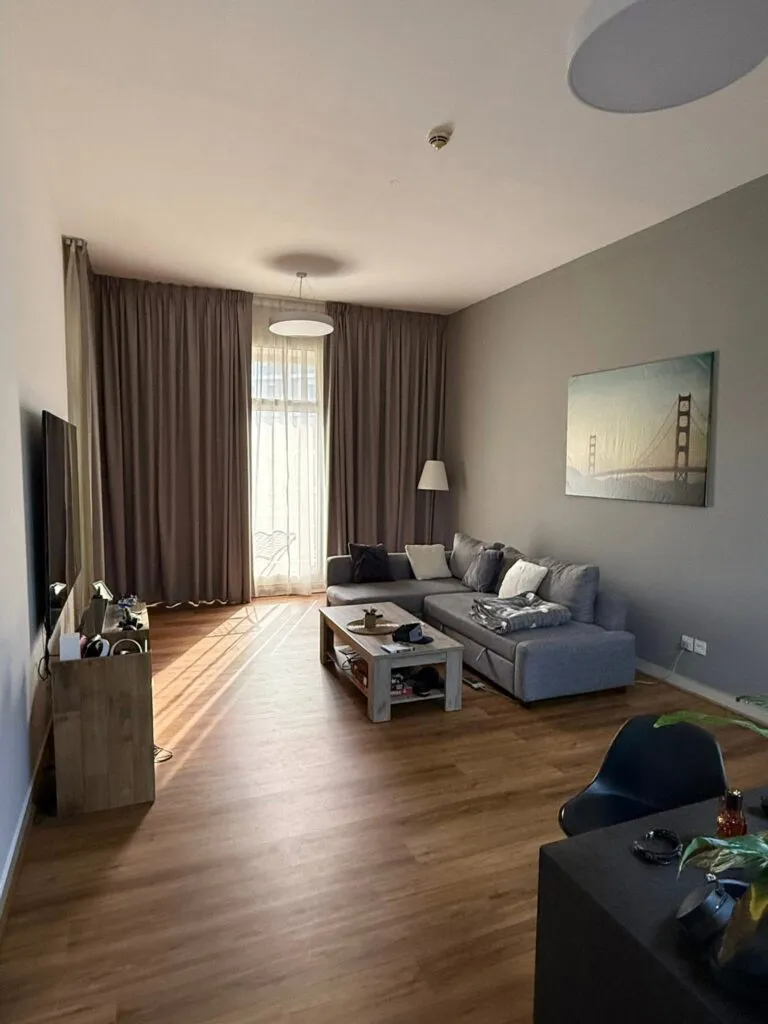
Comfort, Sound, Sand and Repair
LVT is softer and warmer to walk on and quieter in use. SPC feels harder and can sound a little hollow, but many planks have an attached underlay or cushioned backing that cuts sound, which matters in Dubai apartment buildings.
Fine Dubai sand and dust act like sandpaper on any wear layer, so put mats at the doors and sweep often. Maintenance is simple: a damp mop with a neutral cleaner; avoid steam mops. Both reward this care with better durability over the years. For repair, a damaged LVT tile can be lifted and replaced individually; an SPC plank is unclicked from the nearest wall and replaced. Keep a few spare planks from the same batch.
Looks: Wood, Stone and Herringbone
Both come in oak, walnut and teak wood finishes and marble or concrete stone finishes, as long planks, tiles, herringbone or chevron. Glue down LVT gives the crispest small block patterns, while SPC gives long, flat planks for a large open plan living room and kitchen.
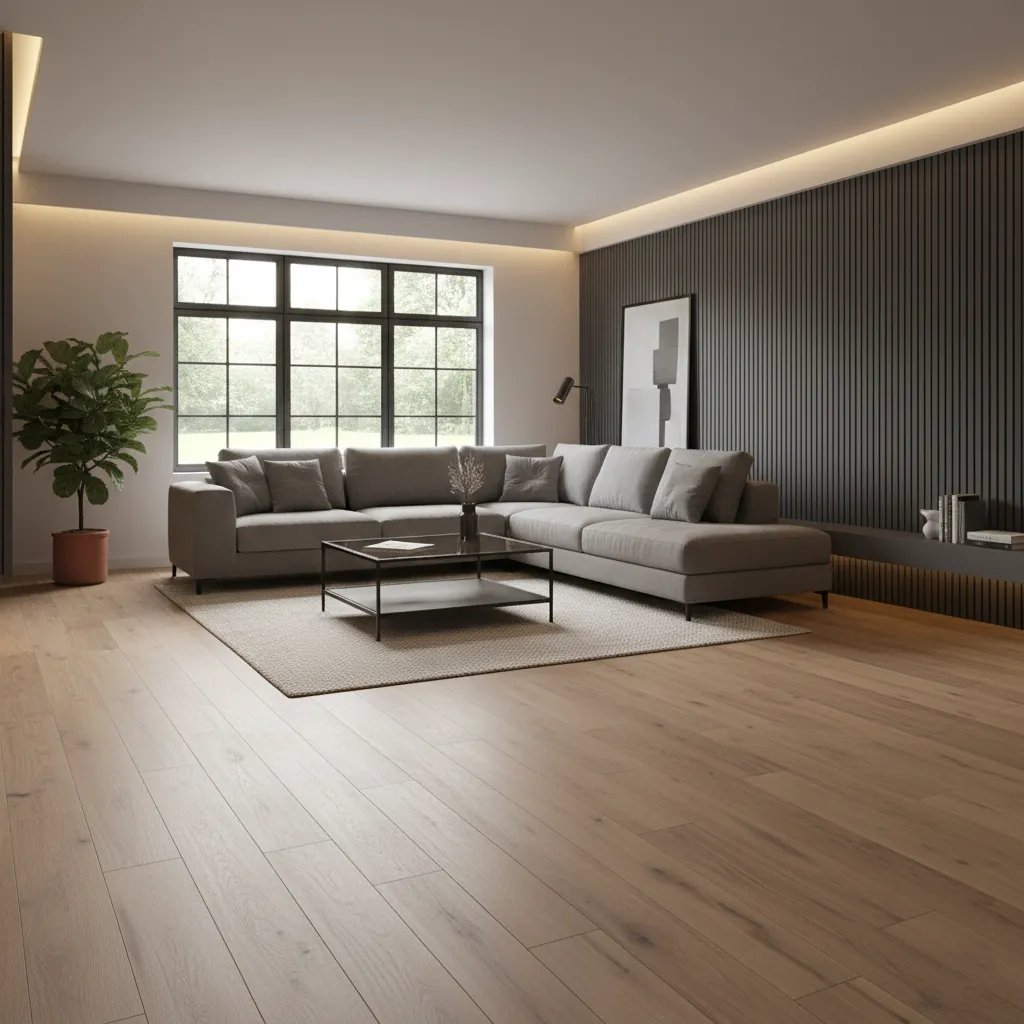
Dubai Villas vs Apartments: Which Suits Your Rooms
- Villa. Open plan living and dining areas, rooms facing the garden or pool, kitchens and areas with heavy foot traffic: SPC, for heat stability and dent resistance under heavy furniture.
- Apartment. Bedrooms, a study or a nursery in a Dubai apartment: LVT, glued over a levelled floor or existing tiles, for comfort and less noise below.
- Mixed homes. Many Dubai families choose SPC downstairs and LVT upstairs, with matching thresholds, so the LVT vs SPC question is often answered room by room.
Still weighing up vinyl against laminate? Read our guide to laminate vs vinyl flooring first.
Choosing SPC Flooring or LVT With Intex Aura
Comparing LVT and SPC samples in your own Dubai light makes the choice easy. Browse our SPC flooring range, LVT luxury vinyl tiles or every option on our flooring page. With 25 years of interior design experience, our team brings free samples, checks your subfloor and measures every room for a free quote, across Dubai and the rest of the UAE. Book a free site visit.
SPC vs LVT FAQs
Which is better, SPC or LVT?
Neither wins everywhere. SPC is better for sunny rooms, kitchens and uneven subfloors; LVT is better where comfort and a slim floor matter, such as bedrooms.
Is SPC more waterproof than LVT?
Yes. SPC flooring is 100% waterproof, while LVT flooring is water resistant and copes with kitchens and bathrooms when glued down with sealed edges.
Is SPC or LVT better for Dubai heat?
SPC has the edge. Its rigid core barely moves, so SPC floors stay flat beside large windows in Dubai summers, while LVT copes well with heat too when it is glued down in sunny rooms.
Can SPC or LVT be laid over existing tiles?
Yes, in most homes, if the tiles are level, firmly bonded and dry. SPC hides grout lines more easily; LVT usually needs a thin levelling layer first.
Which is quieter, LVT or SPC?
LVT flooring is quieter underfoot. SPC flooring with an attached underlay comes close.
Is LVT cheaper than SPC?
LVT flooring is usually slightly cheaper for the material. Total cost also depends on the wear layer, finish and any subfloor levelling.
Choosing between SPC and LVT?
Tell us which rooms you are planning, and we will bring SPC and LVT samples, check your subfloor and give you a free quote.