
The main types of carpet are sorted by two things: the fibre the yarn is spun from (wool, nylon, polyester, polypropylene, blends or natural plant fibres) and the way the pile is built (cut, loop, or a mix of the two). Pick the fibre for how the room is used and the pile for how you want it to look and feel, and thousands of samples shrink to a handful.
Below, each fibre and pile is compared, matched to the right rooms, and tested against sand, air conditioning and strong sun in the Emirates.
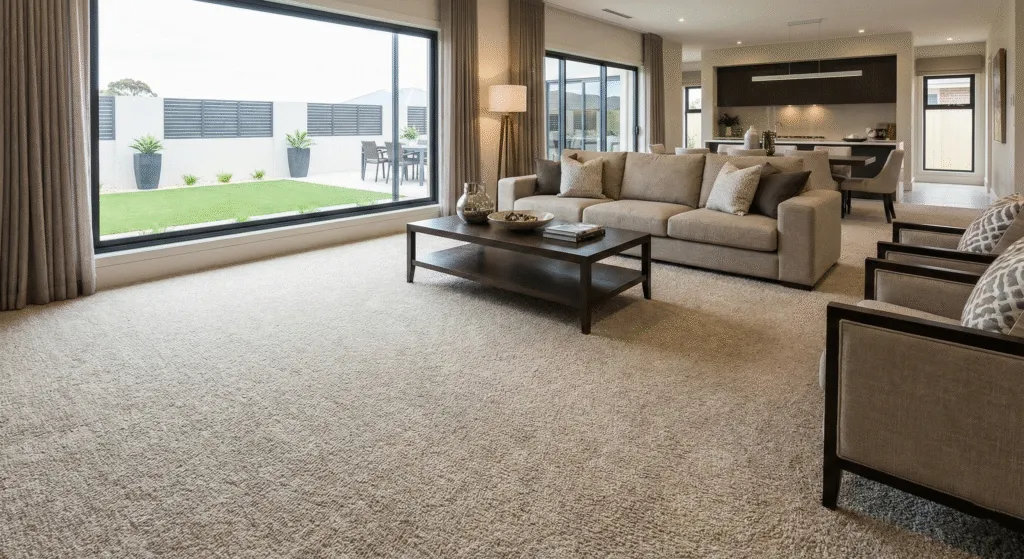
What Decides the Types of Carpet
Every carpet is a backing with yarn tufted or woven through it. The yarn standing up from the backing is the pile, and the surface you walk on is the tips of that yarn. Two carpets in the same colour can wear very differently because of the fibre, the construction and the density, meaning how tightly the tufts are packed.
A quick test helps when comparing samples: press your thumb into the surface. If you reach the backing easily, the density is low and the carpet will flatten in walkways. If it pushes back firmly, it will keep its appearance for longer. Density matters more than height, so short, tightly packed carpets usually outlast long, loose ones.
Carpet Fibres Compared
The fibre sets the feel, the stain resistance and how well carpets recover from crushing.
| Fibre | Feel underfoot | Durability | Stain resistance | Colour in sunlight | Best rooms |
|---|---|---|---|---|---|
| Wool | Soft, warm, springy | Very good | Good, sheds dirt naturally | Can fade in direct sun | Bedrooms, formal living rooms, majlis |
| Nylon | Soft to firm | Excellent | Very good with treatment | Good, best when solution dyed | Stairs, hallways, family rooms, offices |
| Polyester | Very soft, silky | Fair, can crush | Very good on water based spills | Very good | Bedrooms, guest rooms |
| Polypropylene | Firmer, slightly coarse | Good in loop styles | Excellent, resists moisture | Excellent | Busy areas, rentals |
| Wool blends | Soft with more bounce | Very good | Good | Better than pure wool | Most rooms in a family home |
| Sisal and jute | Firm, textured | Good (sisal), modest (jute) | Poor, marks with water | Fair | Dry living and dining areas |
Wool
Wool is the natural benchmark. Its crimp makes wool carpets springy, so they bounce back after footsteps, and the fibre is naturally flame retardant. The trade off is cost, gentler care, and some colour loss in direct sun.
Nylon
Nylon is the toughest and most durable synthetic. It resists crushing in walkways, cleans well and takes colour evenly, which is why it is the usual choice for stairs, hallways and offices. When nylon is solution dyed, the colour runs right through each strand instead of sitting on the surface, so it copes far better with sun and cleaning products.
Polyester
Polyester gives plenty of softness and rich colour for the budget, and it shrugs off water based spills such as juice. It is less resilient than nylon, so it can mat down in a busy corridor. In a quiet bedroom that hardly matters, which makes polyester a popular bedroom carpet.
Polypropylene
Polypropylene, also called olefin, barely absorbs water and is colourfast, so it handles damp and bright light well. It is firmer and less springy than nylon and works best in a dense loop. It suits rentals and play areas.
Blends
Blends balance the strengths of different materials. The classic is about 80 percent wool to 20 percent nylon: the wool brings warmth and softness, and the nylon adds strength and lowers the cost.
Sisal, jute and natural fibres
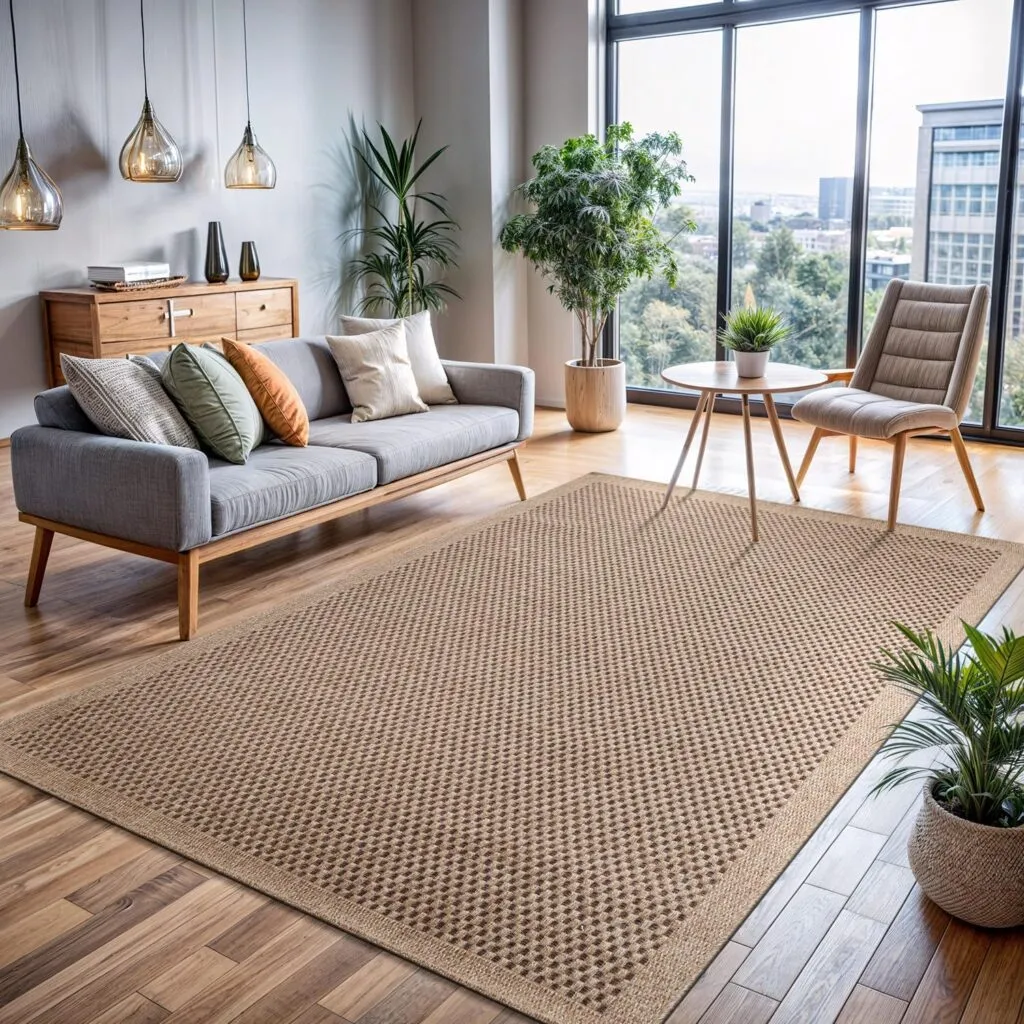
Sisal, jute and seagrass are plant fibres woven into flat or ribbed textures. They give a calm, natural look, but they are firmer underfoot, mark if water sits on them, and jute wears faster than sisal. Keep them for dry living and dining areas.
Carpet Pile Types Compared
Pile style controls the look, the softness and how much carpets show footprints.
| Pile type | How it is made | Look and feel | Shows footprints? | Good for |
|---|---|---|---|---|
| Cut pile (plush or velvet) | Loops cut so the tips stand upright | Smooth, soft | Yes | Bedrooms, formal rooms |
| Saxony | Longer, dense cut pile with set twist | Rich and velvety | Yes, clearly | Bedrooms, quiet living rooms |
| Twist and frieze | Cut yarn twisted tightly, often curled | Textured, casual | Hardly | Family rooms, stairs, hallways |
| Loop pile | Yarn left in uncut loops | Neat, firm | Very little | Offices, hallways |
| Berber | Chunky looped yarn, often flecked | Knobbly, natural | Very little | Living rooms, dens |
| Cut and loop | Mix of cut and looped yarn | Sculpted patterns | Little | Living rooms, majlis |
| Shag | Very long, loose cut pile | Deep and cosy | Yes | Low use corners |
Cut pile
In cut pile carpet the loops are sliced at the top so the tips stand upright. It gives the softest feel of any construction, and short, dense versions are called velvet or plush.
Saxony
Saxony is a dense cut pile with more height and a set twist in each tuft, giving a smooth, velvety style. It looks luxurious, but it records every footprint and vacuum stroke.
Loop pile and Berber
Loop pile leaves the yarn uncut, which makes it hard wearing and good at hiding dirt and footprints. Berber is a chunky loop with flecked yarn and a natural texture. The caution is snagging: claws can catch a loop and pull a run, so cut styles are safer in homes with pets.
Twist and frieze
Twist carpet is cut pile in which each yarn is twisted tightly before it is heat set. Frieze takes this further, with long twisted strands that curl over at the surface. Both hide footprints and vacuum marks, which makes frieze a sensible choice for a busy family home.
Cut and loop
Cut and loop carpet mixes cut tufts and uncut loops in one surface, and the difference in height creates patterns such as squares, swirls or stripes. It gives a decorative design without a printed pattern.
Pile height and density
Pile height is described as low, medium or high. Low pile is the easiest to clean and suits high traffic areas, stairs and chairs on castors. Medium pile is the comfortable middle. Deep pile and shag feel cosy but trap more dirt and flatten under furniture legs.
The Best Carpet for Bedrooms
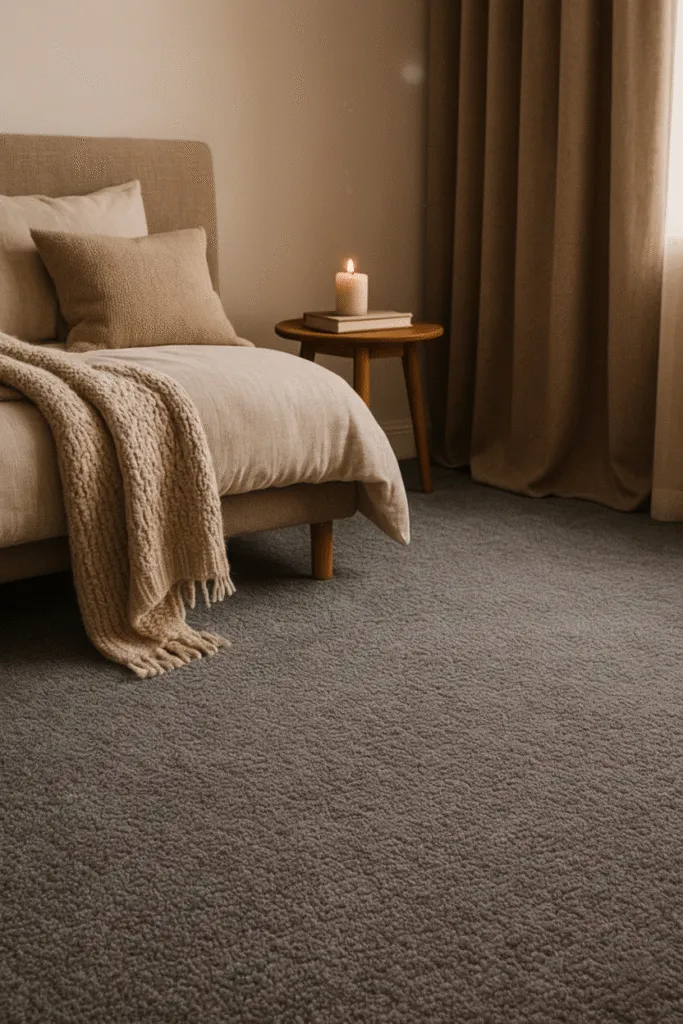
The best carpet for bedroom floors is a soft cut style, such as Saxony, plush or a soft twist, in wool, a wool blend or a soft polyester. A bedroom sees little traffic, so deep pile and softness can come ahead of hard wearing performance, and bare feet are the real test.
- Fibre: wool for warmth and natural static resistance, polyester for softness on a smaller budget, nylon if children or pets share the space.
- Pile: medium to deep cut pile. Avoid loops if a cat sleeps on the bed.
- Colour: mid tones hide dust better than pale cream and outlast a change of bedding.
- Texture: a soft twist adds subtle texture to a bedroom without the snag risk of loops.
- Allergies: carpets hold dust down until it is vacuumed, so people with allergies do best with a low to medium pile and a vacuum with a fine filter.
- Underlay: a thicker, softer underlay makes even a modest carpet feel luxurious and adds comfort.
Which Carpet Suits Which Room
Living rooms
A living room needs comfort and a durable style in balance. A twist, frieze or cut and loop carpet in nylon or a wool blend handles guests and children without showing every step. For other flooring in the same space, see our living room flooring ideas.
Stairs and hallways
Stairs are among the high traffic areas of any home. Choose a durable, dense, low pile in nylon or a wool blend over a firm, thin underlay so each nosing stays crisp and safe.

Children’s rooms
Kids spill drinks and play on the floor, so a children’s bedroom carpet should be stain resistant nylon or polyester in a soft cut pile. A subtle fleck hides stains between cleans.
Majlis
A majlis is a formal space where guests sit close to the floor, so softness and appearance matter. Wool or a wool rich blend in a plush cut pile, or cut and loop with a traditional pattern, gives the room a generous feel.
Offices
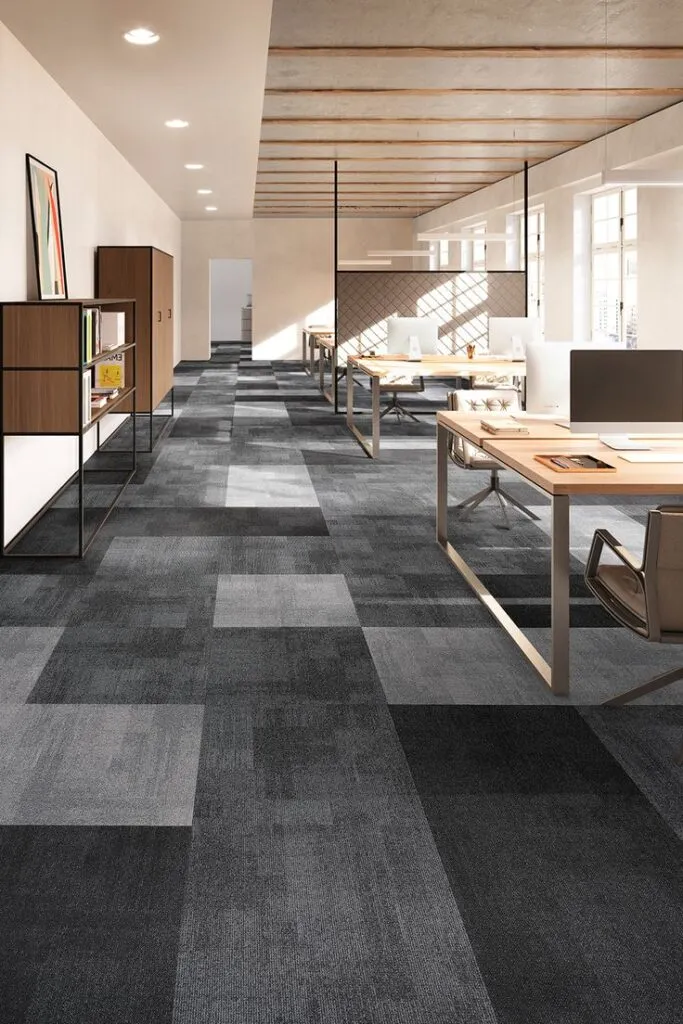
Offices need low, dense loop pile in nylon, often laid as office carpet tiles. Carpet tiles are usually 50 cm by 50 cm, and a stained or worn tile can be lifted and replaced on its own, which keeps maintenance simple. Carpet tiles also hide small subfloor flaws and are quick to lay, so installation causes little disruption.
How Carpets Cope With Dubai Conditions
Sand and dust
Fine grit drifts in on shoes and through balcony doors. Carpets hold it instead of letting it blow back into the air, and a good vacuum lifts it out. Grit left deep in the pile slowly abrades the yarn, so regular vacuuming matters more here than in cooler climates. Twist and loop styles, or a flecked colour, hide it best between cleans.
Air conditioning, dry air and static
Rooms cooled most of the year have low humidity, and dry air lets static build up as you walk across synthetic carpet. Wool holds a little moisture, so it resists it naturally; with nylon or polyester, an antistatic treatment helps. Cool rooms are also where carpet feels best underfoot, and with underlay it adds insulation that helps rooms hold their temperature.
Heat, sunlight and fading
Strong sun through large windows is the main cause of fading. Solution dyed nylon, polyester and polypropylene hold their colour best, and wool fades sooner. Blinds or sheers cut the heat and glare, and a mid tone shows less fading than a strong colour.
Villas and apartments
In apartments, footsteps on hard flooring such as porcelain or marble carry to the flat below. Wall to wall carpet over a dense underlay cuts that noise a great deal, which is why many owners choose it for every bedroom. In villas, carpet on upper floors and stairs stops sound travelling down through the house, and good underlay adds a second layer of insulation.
Caring for Your Carpet
Low maintenance starts with the vacuum: run it at least weekly, and more often in dusty months. Blot spills straight away with a clean cloth and never rub, because rubbing spreads stains and frays the yarn. Wool needs gentle cleaning with little water and should never be soaked, while synthetic carpets tolerate more. A professional deep clean once or twice a year completes the maintenance routine.
Choosing Carpet With Intex Aura
Choosing carpets is easier with samples in your own light. With 25 years in interior design behind us, our team visits free of charge anywhere in the UAE, measures each room, brings free samples and prepares a free quote. From survey to supply and installation, one team stays with you, your flooring is protected while we work, and the packaging leaves with us. Weekend and evening visits are available too.
Browse our full carpets range, compare colours and fibres in our wall to wall carpets, and choose carpet underlays for comfort and quiet. If you are deciding between fitted wall to wall carpet and a rug, our carpet vs rug guide compares the two. Book a free site visit to see samples at home before the installation is planned.
Types of Carpet FAQs
What are the main types of carpet?
Carpets are grouped by fibre (wool, nylon, polyester, polypropylene, blends and natural materials such as sisal) and by pile (cut, loop, or cut and loop). Saxony, twist, frieze and Berber are popular styles within those groups.
What is the best carpet for a bedroom?
A soft cut pile such as Saxony, plush or a soft twist suits most bedrooms. Wool feels warmest and resists static, while polyester gives great softness for less. Choose nylon if children or pets use the room.
Is cut pile or loop pile better?
Cut pile is softer and suits bedrooms and formal rooms, but it shows footprints. Loop pile is harder wearing and hides dirt, so it suits hallways, offices and busy family rooms.
Which carpet is best for stairs?
A dense, low pile in nylon or a wool blend is best for stairs. Fit it over a firm, thin underlay so each nosing stays sharp and the carpet wears evenly.
Does carpet work in Dubai's heat and dust?
Yes. Carpet traps dust until it is vacuumed and adds warmth in air conditioned rooms. Choose solution dyed fibres for sunny rooms and vacuum weekly so grit does not wear the pile.
Why does my carpet give static shocks?
Dry, air conditioned air lets static build up as you walk across synthetic fibres. Wool resists it naturally, and an antistatic treatment or a little more humidity reduces it on nylon and polyester.
Does Intex Aura bring carpet samples to my home?
Yes. Free samples come with every free site visit, wherever you are in the UAE, so you can compare fibres and colours in your own light before you get a free quote.
Planning new carpet for your bedrooms?
We measure each room on a free site visit, bring samples of every fibre and pile, and put the carpet costs in a free quote.